At Mind Project, we offer a collection of free ESDM-informed and child therapy resources designed to support children aged 0–8 years. Developed within our Kogarah clinic, these worksheets and activities draw on evidence-based approaches, including the Early Start Denver Model (ESDM) for younger children and JASPER-informed strategies for school-aged children.
Our resources focus on communication, social connection, emotional regulation, play skills and developmental learning through practical activities that families can use at home.
These resources are intended for general educational purposes and may be helpful alongside your child's therapy or support program. If you are seeking individualised guidance, we recommend consulting a suitably qualified professional.
ESDM & Child Therapy Worksheets
Quick Link Access

Receptive Communication
Helping children understand words, instructions, and everyday language.
Expressive Communication
Supporting children to use sounds, words, and gestures to communicate.
Social Skills
Building connection through eye contact, turn-taking, and shared enjoyment.
Play
Developing imagination, engagement, and learning through play.
Fine Motor Skills
Improving hand control for drawing, stacking, and everyday tasks.
Cognition
Encouraging thinking, problem-solving, and early learning skills.
Gross Motor Skills
Strengthening balance, coordination, and whole-body movement.
Receptive Communication Activities for Early Intervention and Autism
Early intervention activities that help toddlers and preschool children understand words, instructions, and everyday language.
What is Receptive Communication?
Receptive communication refers to a child’s ability to understand words, instructions, and everyday language. These skills help children follow directions, respond to others, and learn through interaction.
The activities below are designed for toddlers and preschool children receiving early intervention support, including children with autism or developmental delays.
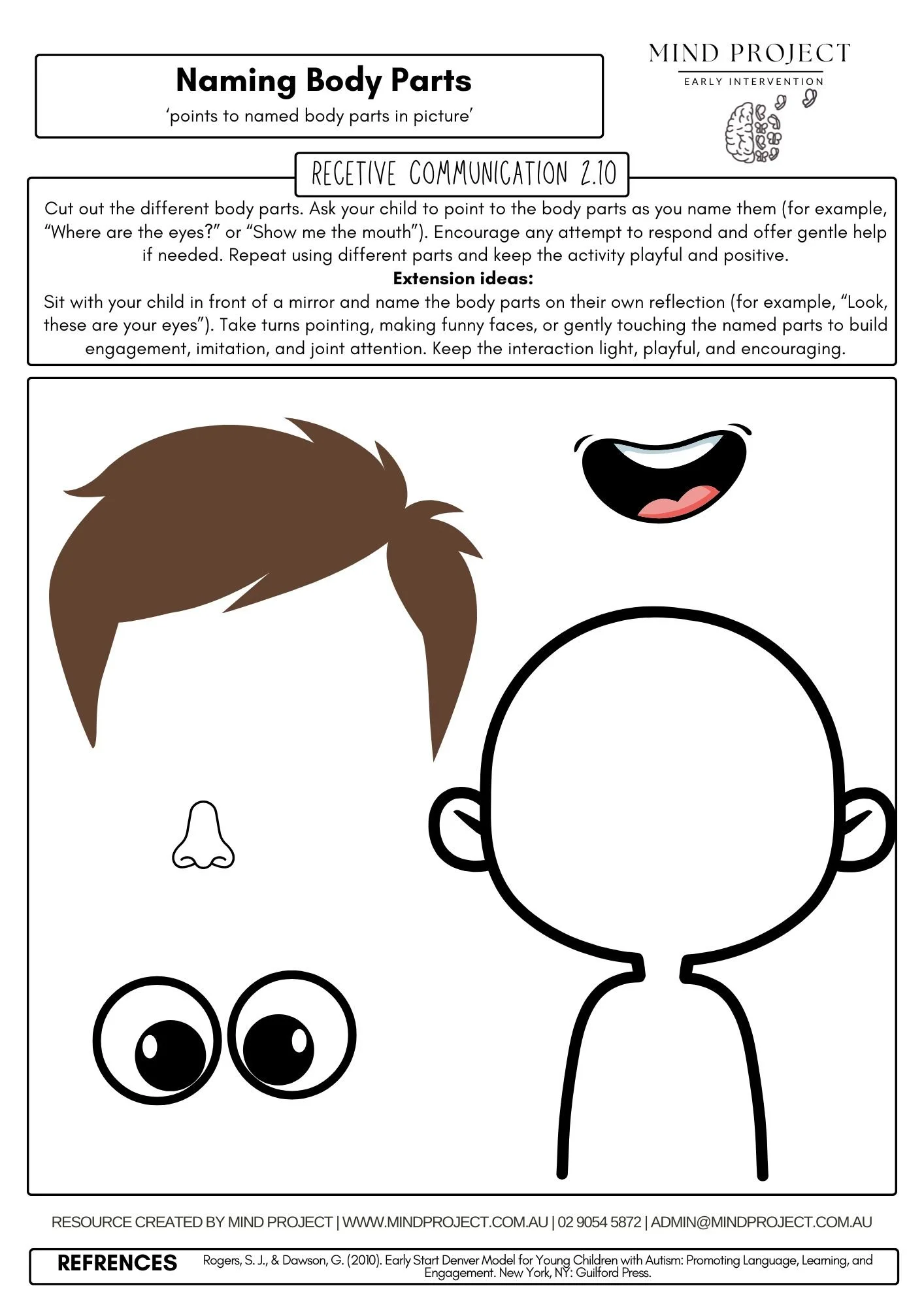
Printable early intervention worksheet supporting receptive language, body part identification, and communication skills in toddlers, preschoolers, and autistic children through play-based learning.
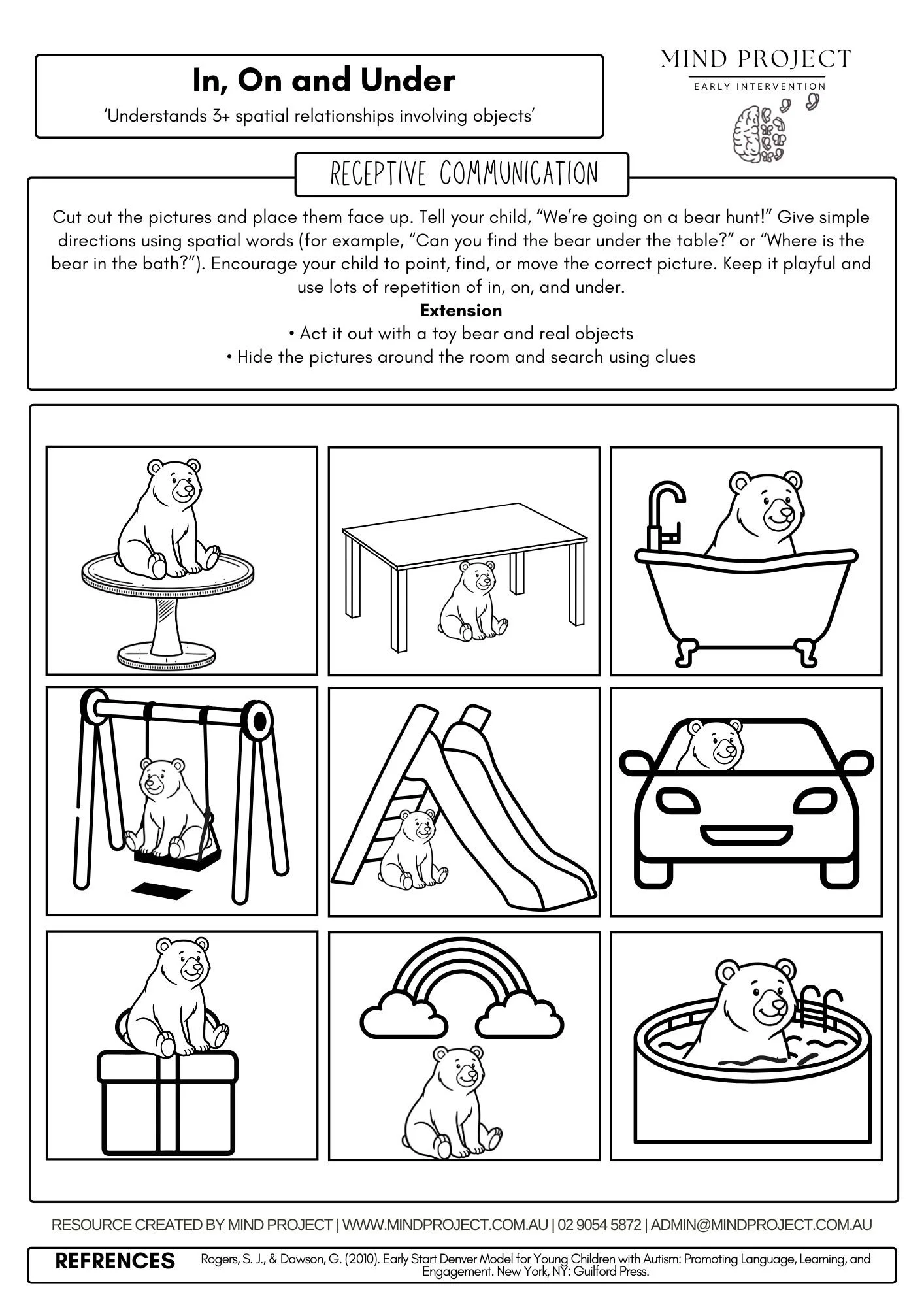
Printable preschool worksheet teaching spatial concepts such as in, on, and under while supporting receptive communication, autism early intervention, and language development.
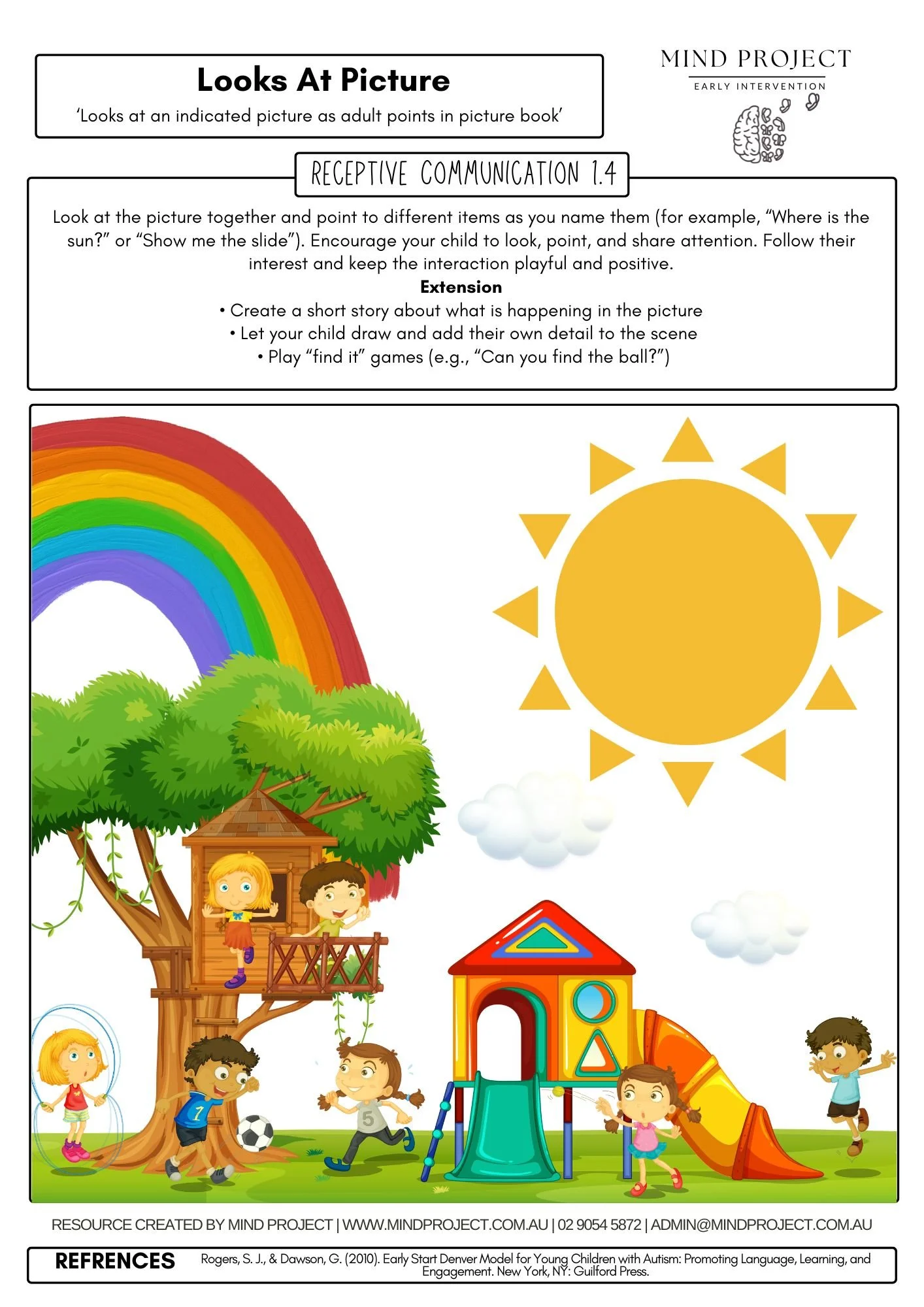
Play-based early intervention worksheet supporting joint attention, social engagement, and receptive language development through visually engaging picture activities.
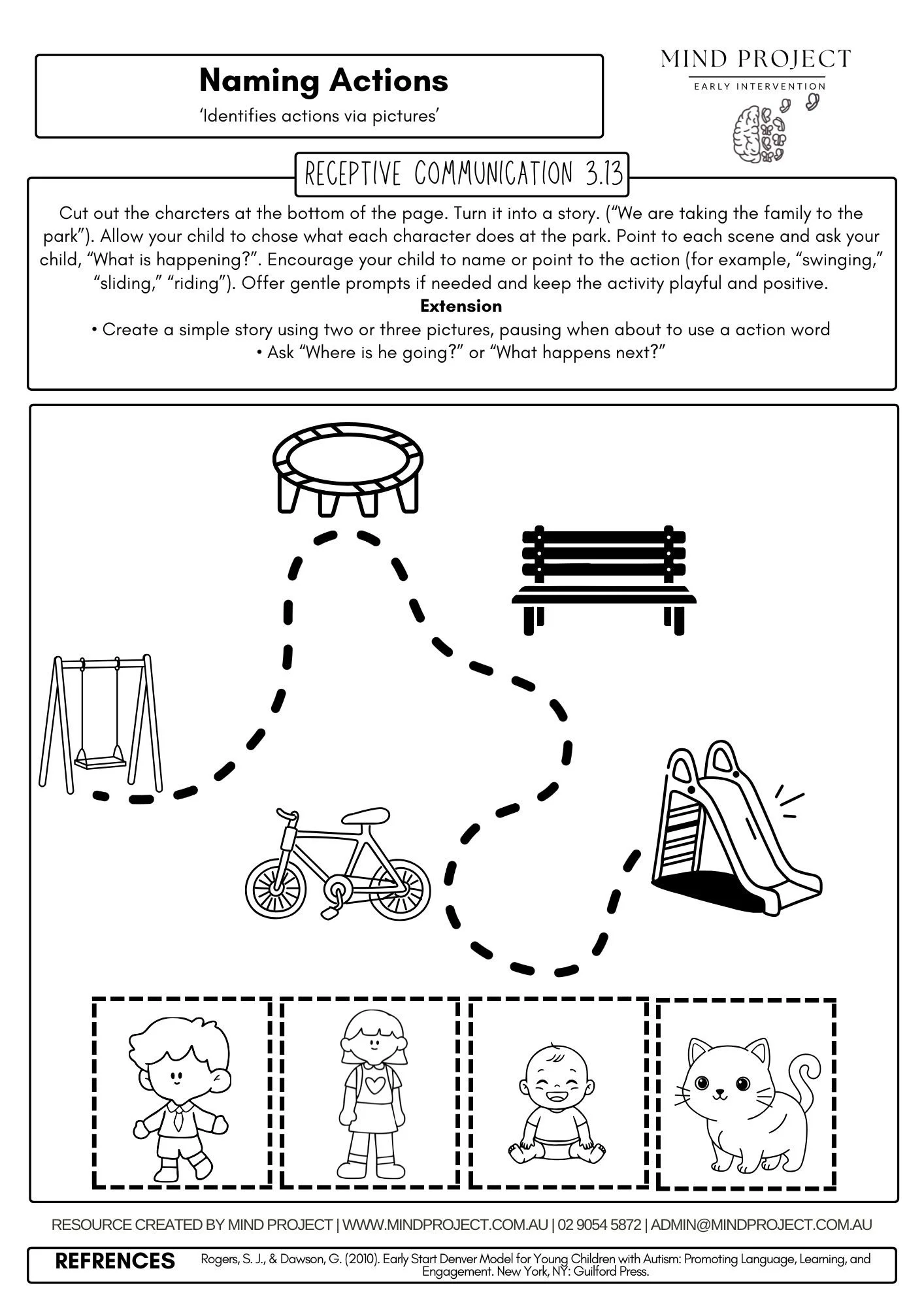
Printable language worksheet helping children identify actions and verbs while supporting communication, speech development, and autism early intervention skills.
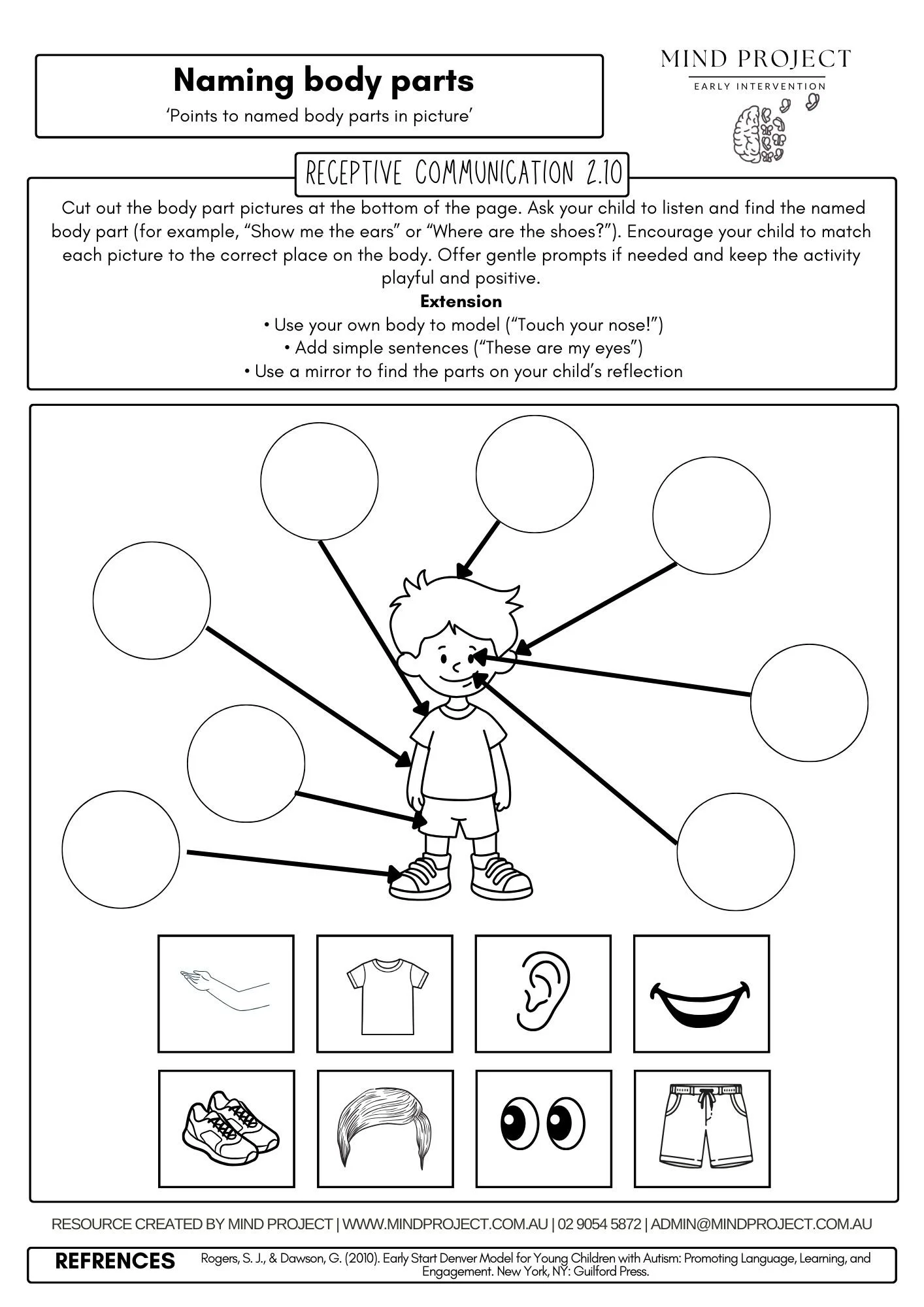
Printable early intervention worksheet supporting body part identification, receptive language, and communication skills in toddlers, preschoolers, and autistic children.
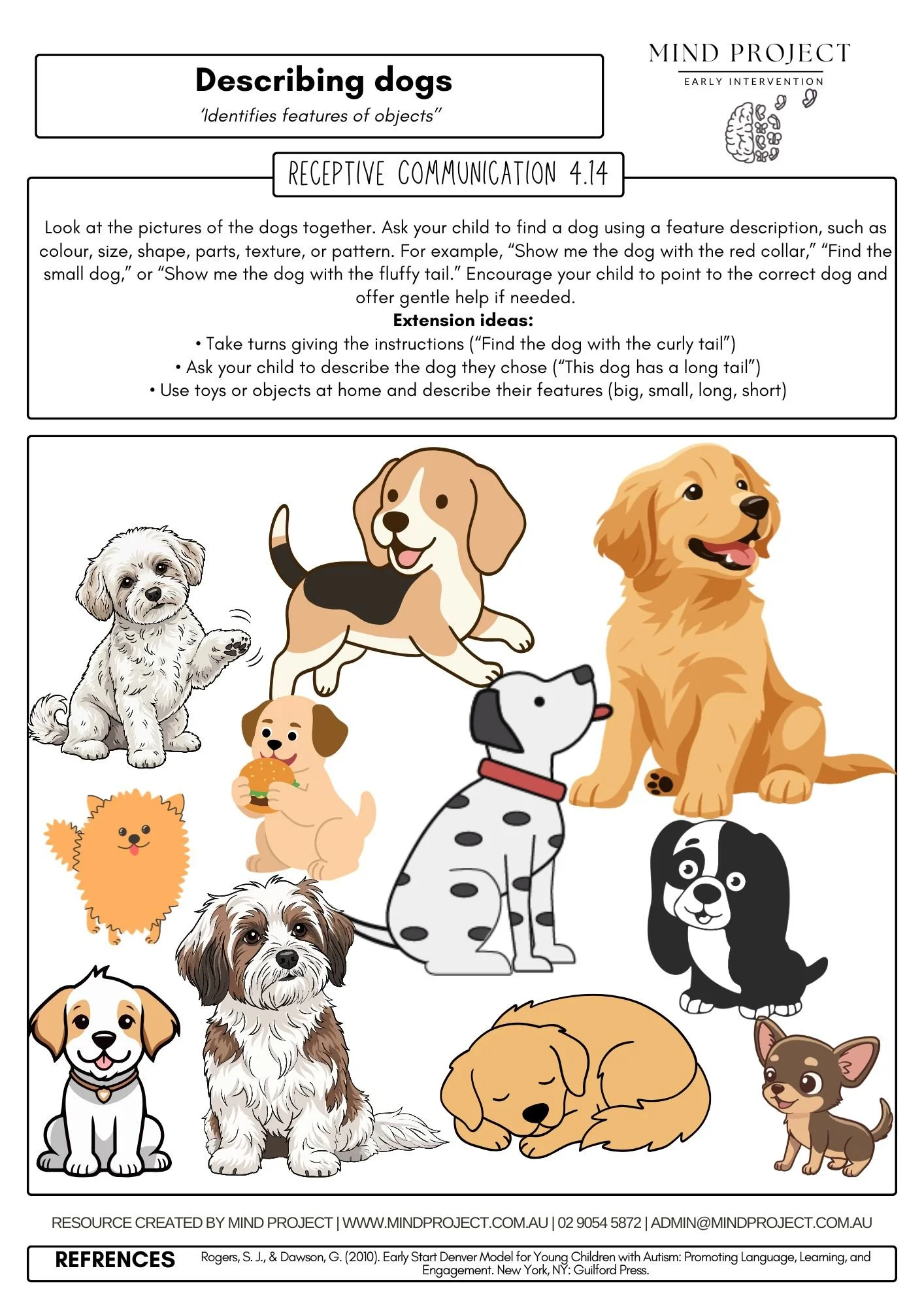
Play-based language worksheet helping children describe animals using features such as size, colour, and texture while building vocabulary, communication, and early language skills.
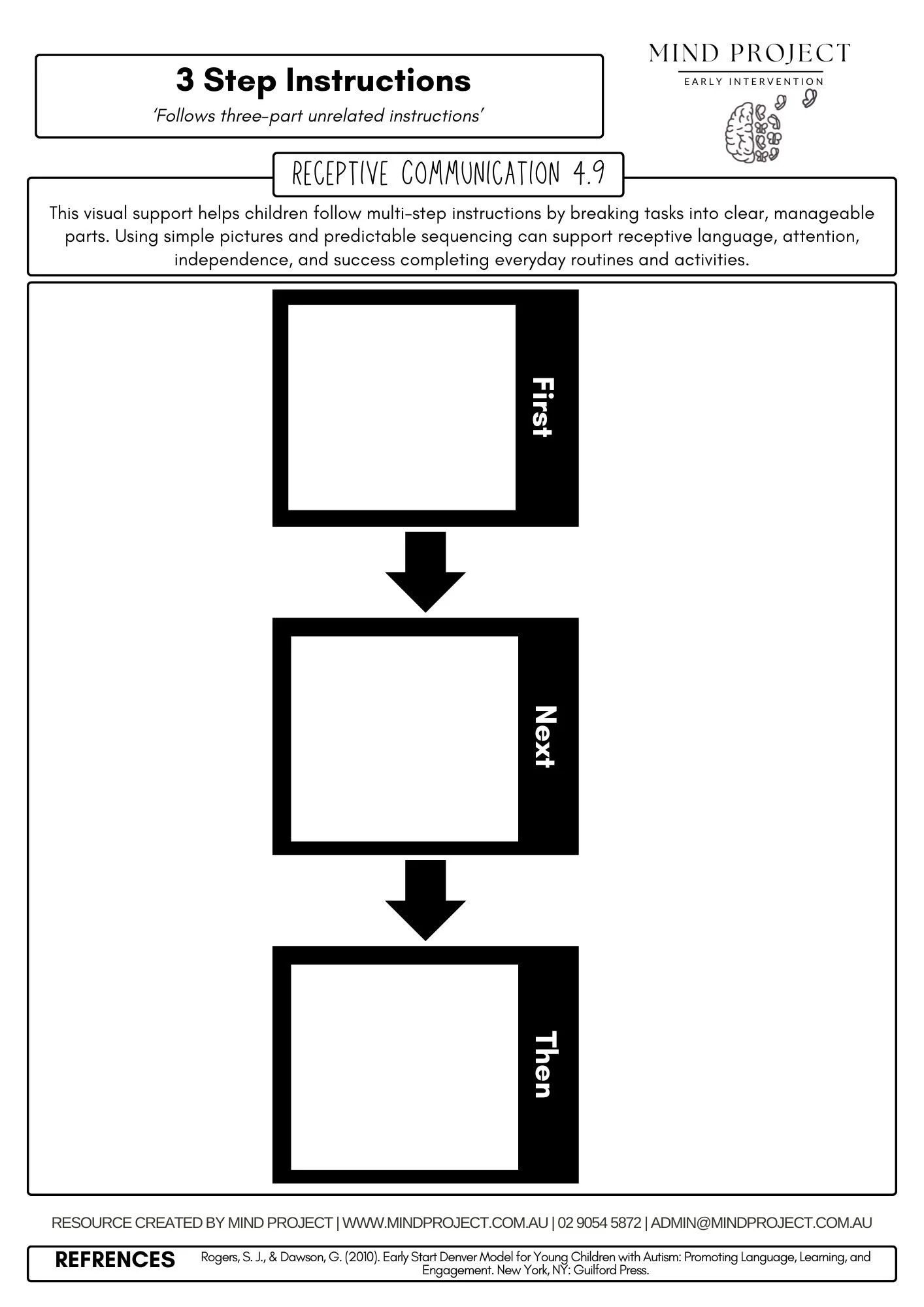
Printable visual support worksheet helping children follow multi-step instructions, improve receptive communication, and build independence in everyday routines and activities.
Expressive Communication Activities for Early Intervention and Autism
Early intervention activities that help toddlers and preschool children develop expressive communication skills.
What is Expressive Communication?
Expressive communication refers to a child’s ability to use sounds, gestures, words, or symbols to share their wants, needs, and ideas with others. Developing expressive communication helps children participate in social interactions and communicate more independently.
The activities below support toddlers and preschool children in early intervention, including children with autism or communication delays.
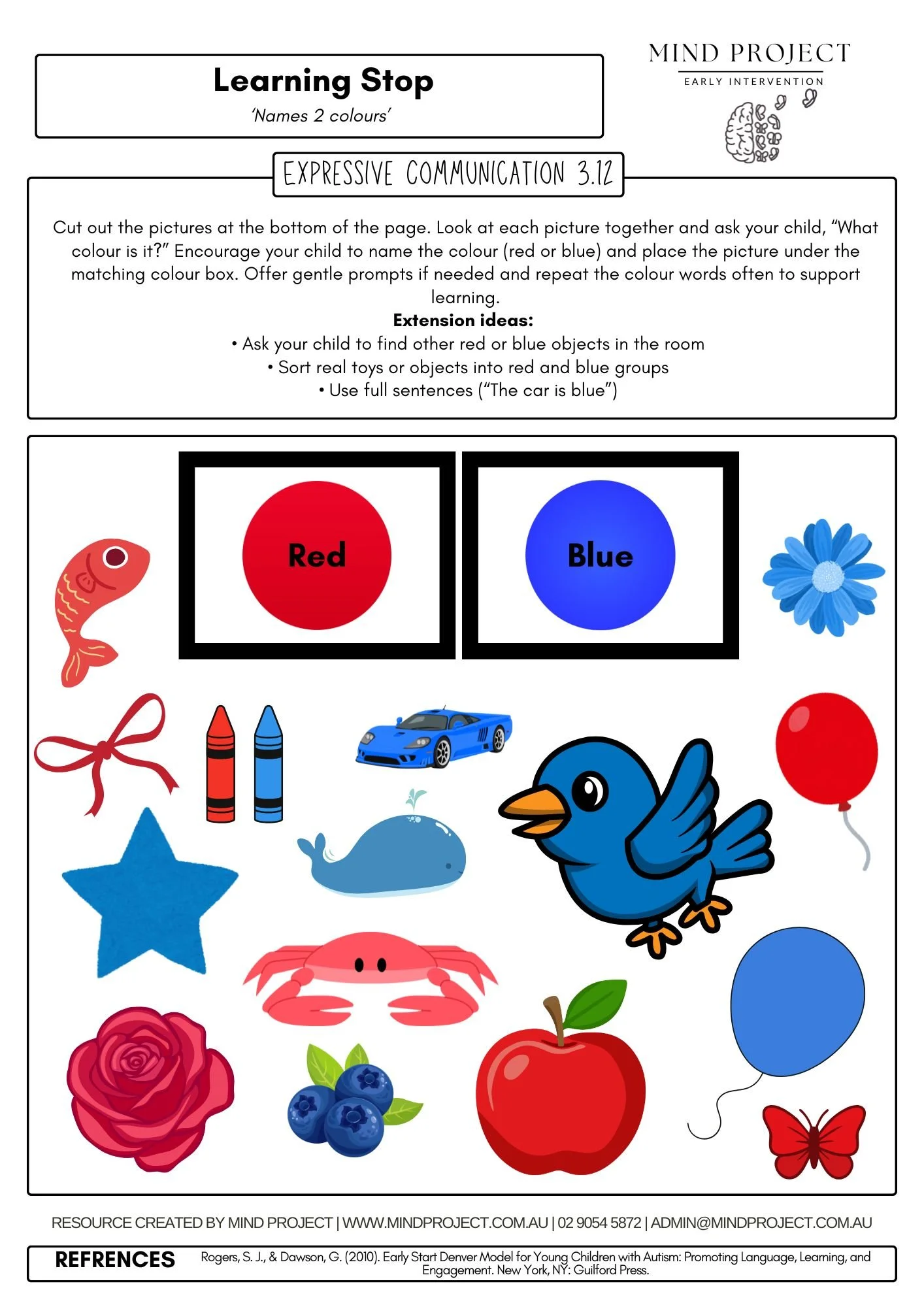
Printable expressive language worksheet helping children learn colours, sort objects, and build early communication skills through play-based learning activities.
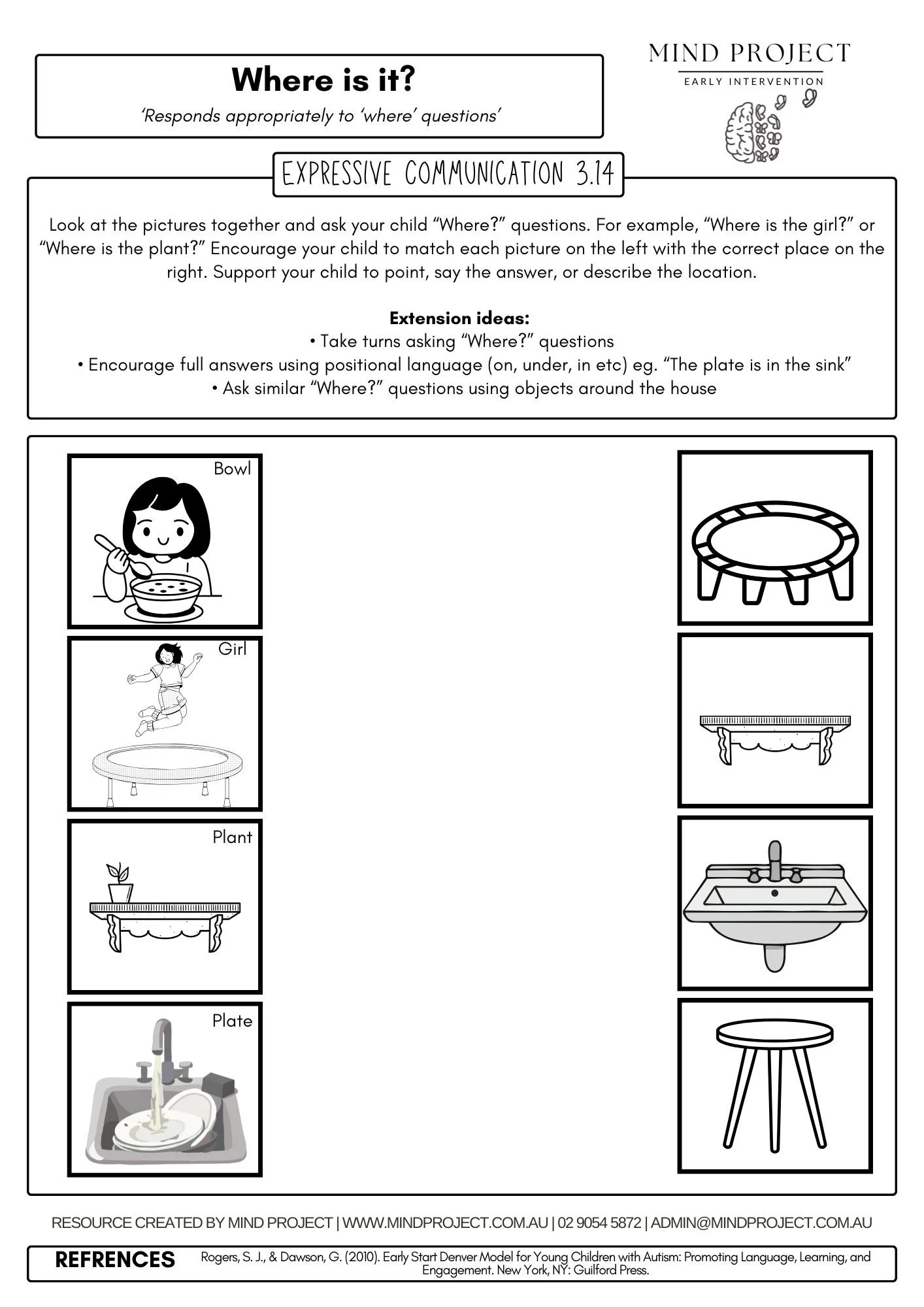
Early intervention worksheet supporting “where” questions, positional language, and expressive communication skills in toddlers, preschoolers, and autistic children.
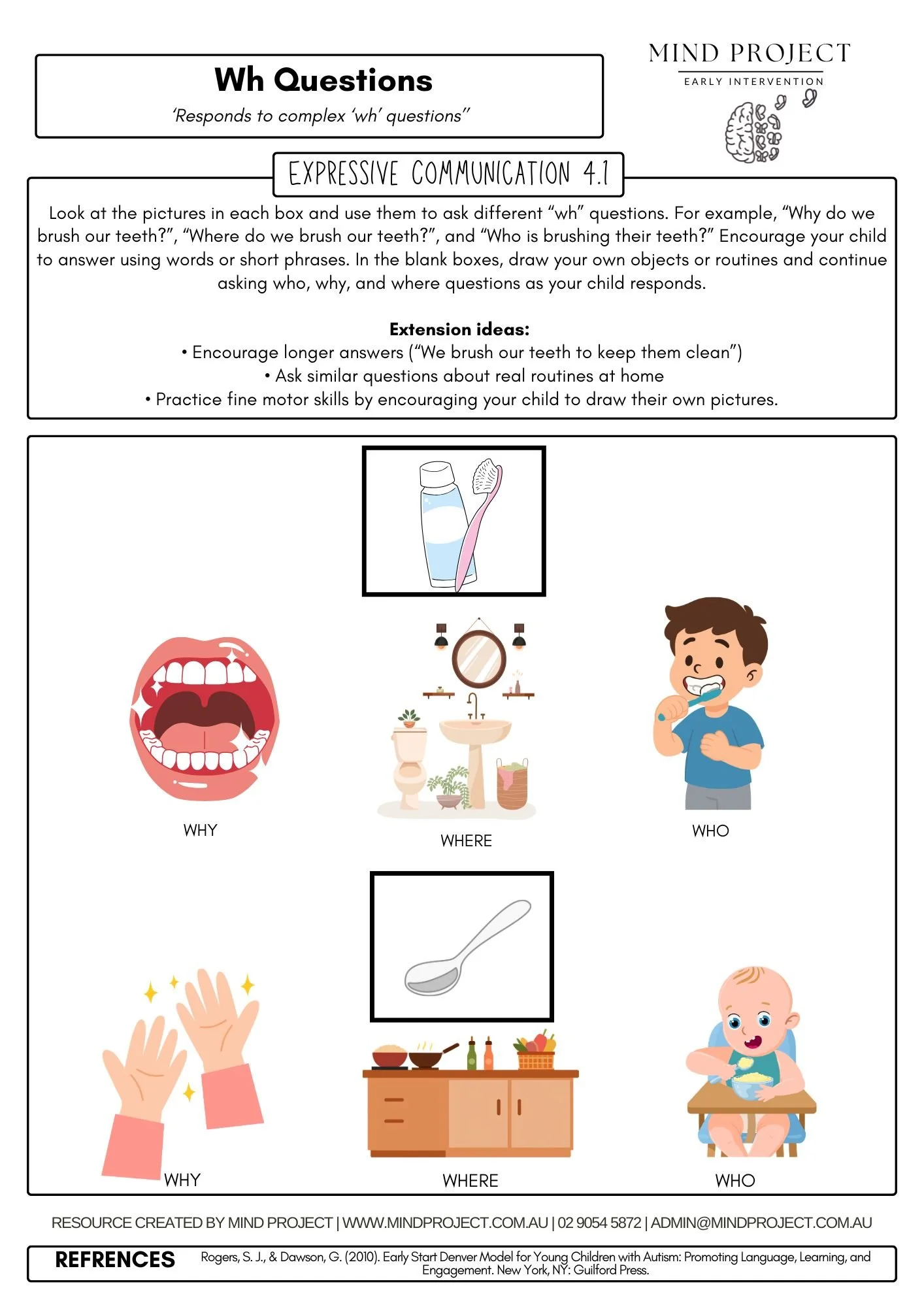
Printable language activity helping children answer WH questions such as who, where, and why while supporting expressive language, comprehension, and social communication development.
Social Skills Activities for Early Intervention and Autism
Early intervention activities that help toddlers and preschool children develop social interaction, turn-taking, and shared engagement.
What are Social Skills?
Social skills help children connect and interact with others. These skills include eye contact, turn-taking, shared attention, imitation, and enjoying activities with other people.
The activities below support toddlers and preschool children in early intervention, including children with autism, to build positive social interaction and engagement.
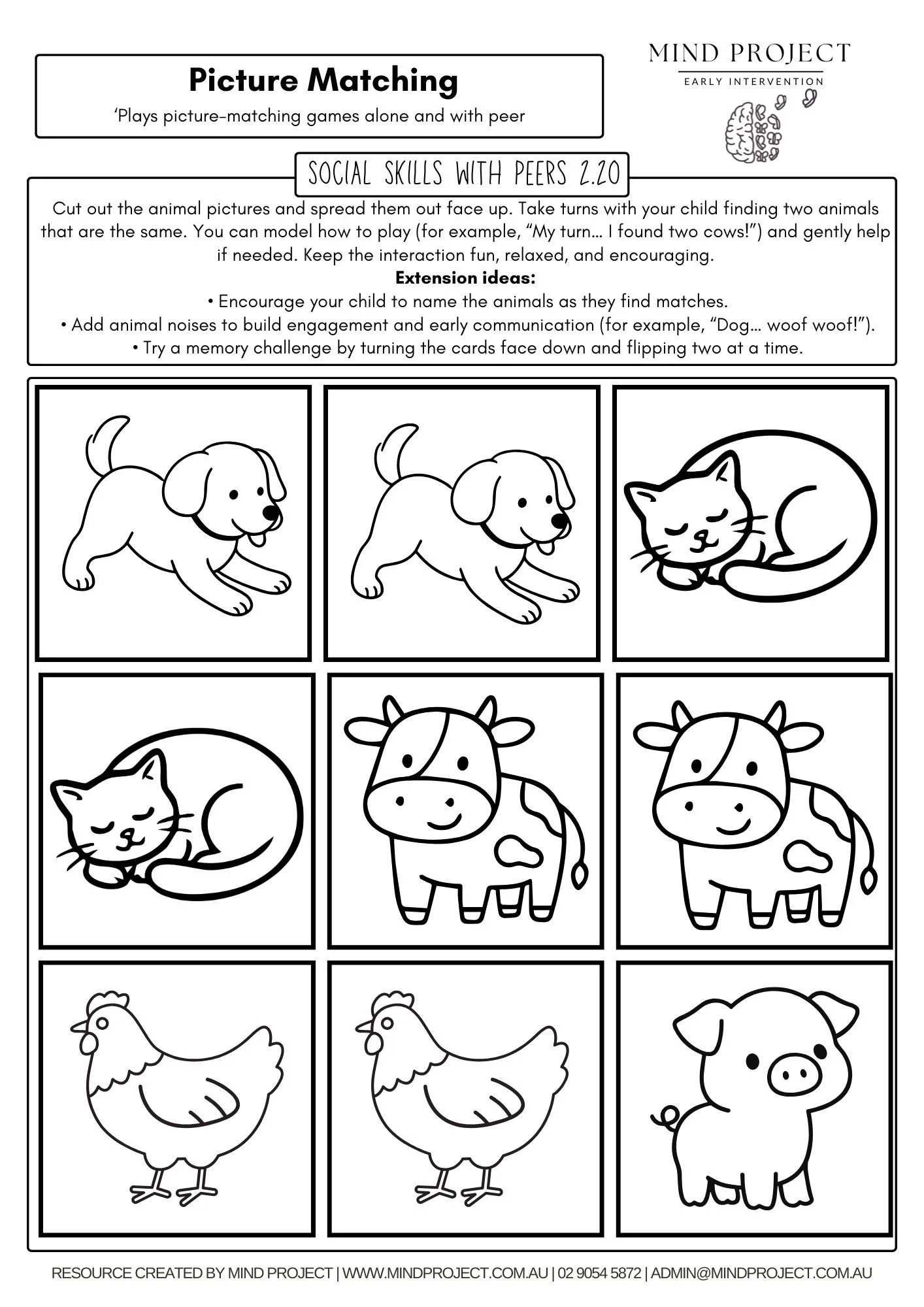
Printable matching activity supporting visual discrimination, attention, turn-taking, and early social communication skills through play-based learning for young children.
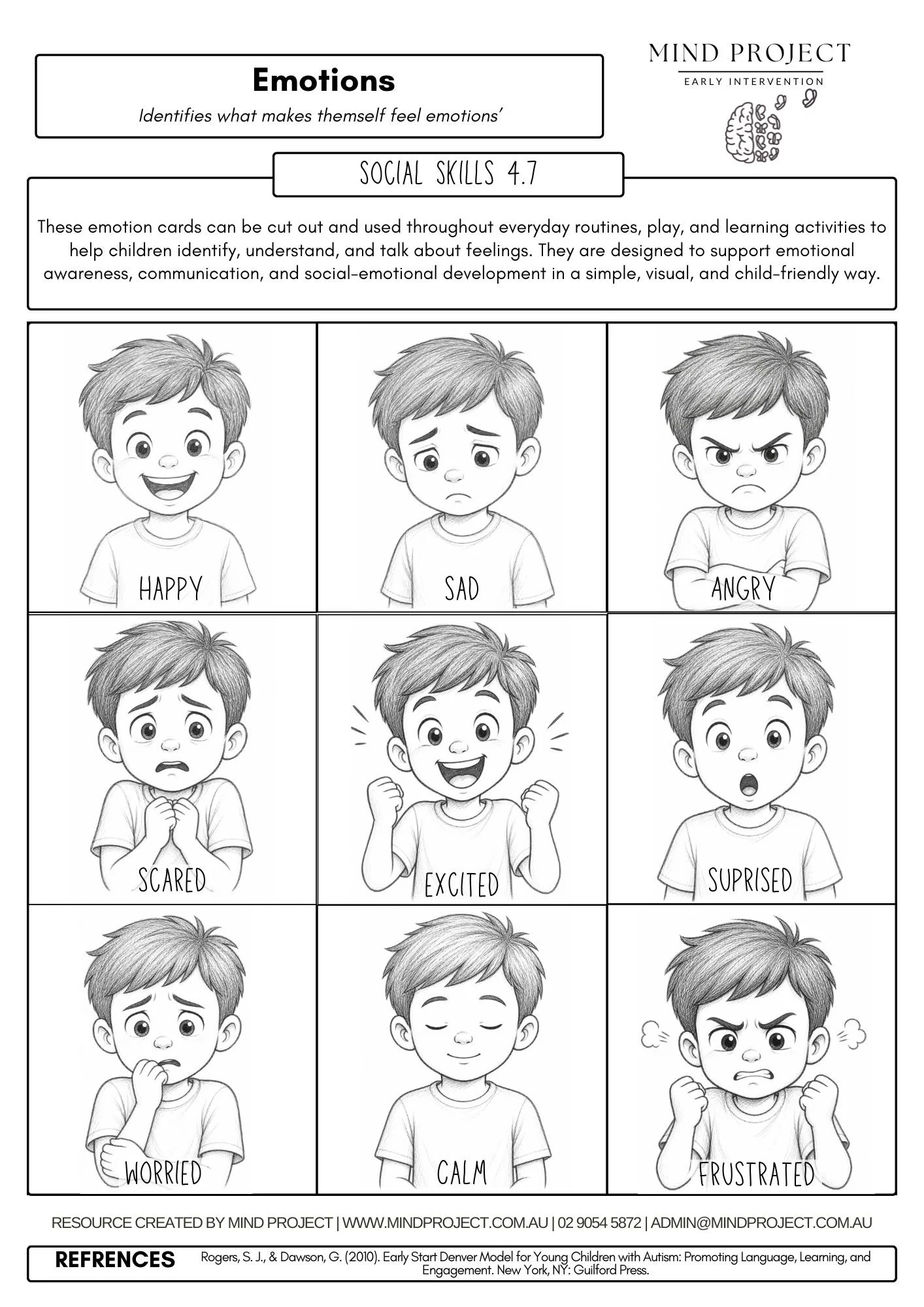
Printable emotions chart helping children recognise, label, and understand feelings such as happy, sad, angry, worried, and calm while supporting emotional regulation and social-emotional development.
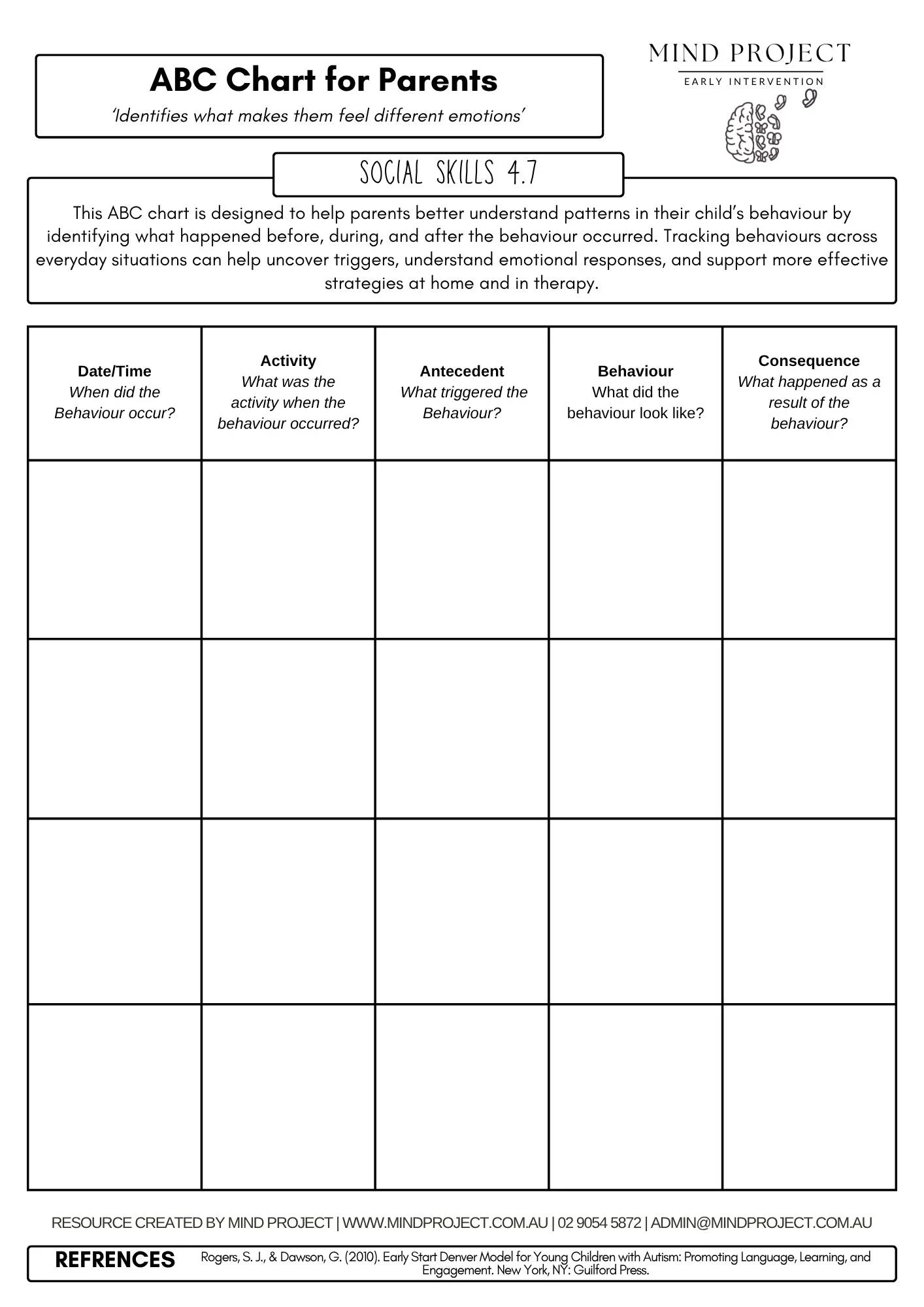
Printable ABC behaviour chart for parents to track antecedents, behaviours, and consequences while supporting emotional regulation, behaviour understanding, and positive behaviour support strategies.
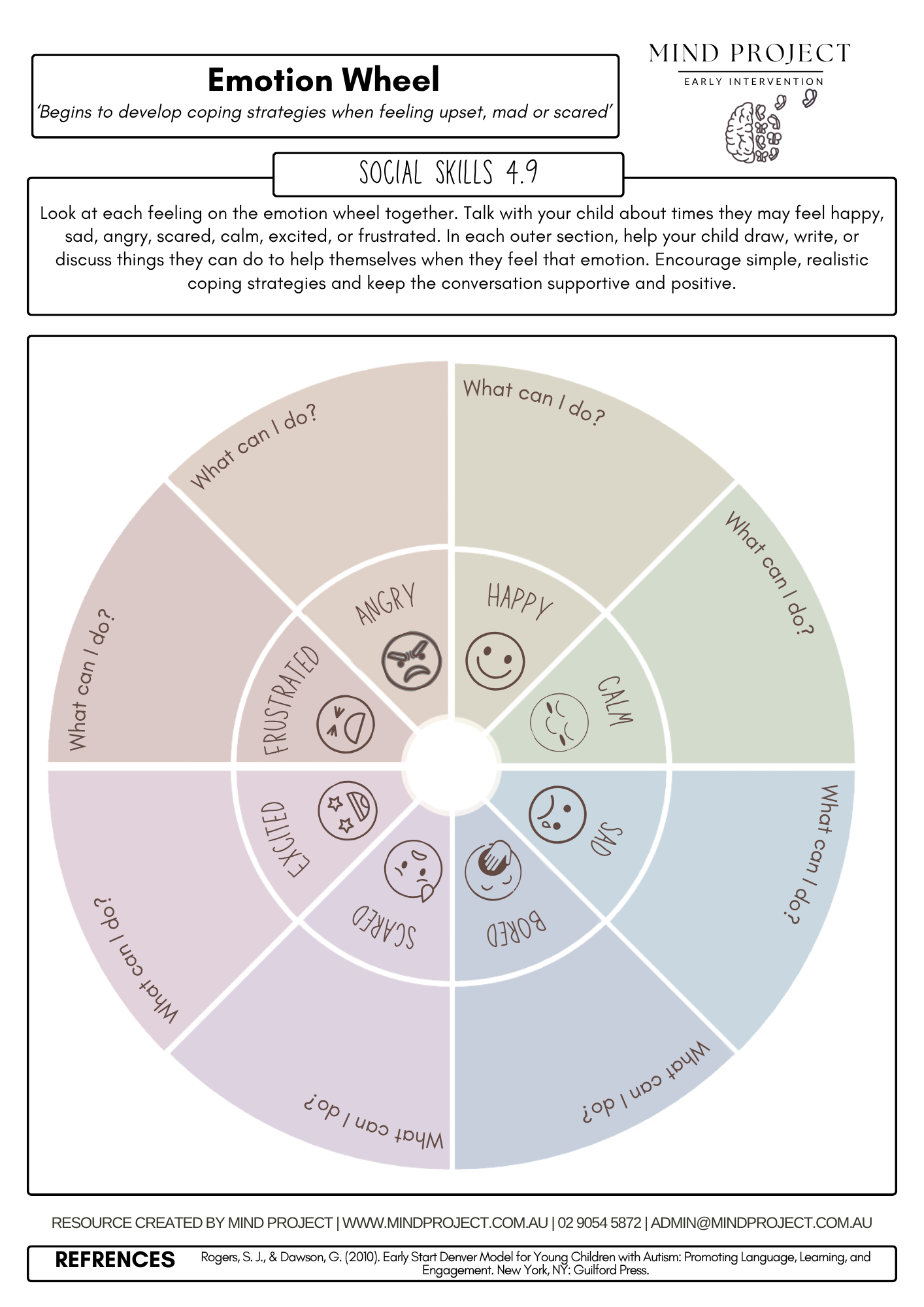
Printable social-emotional learning worksheet helping children identify feelings such as happy, sad, angry, frustrated, calm, excited, and scared while developing coping strategies and emotional regulation skills through a visual emotion wheel activity.
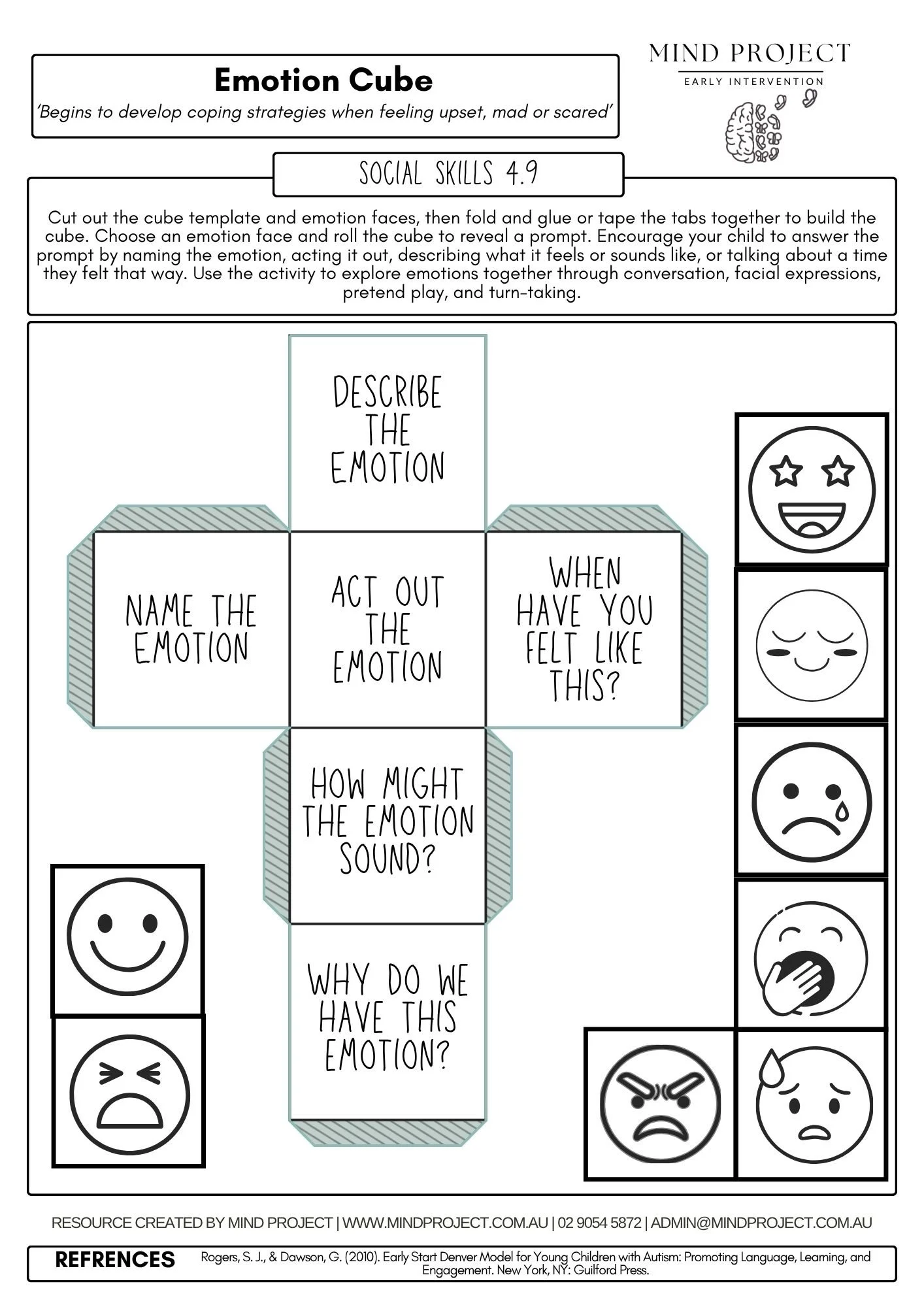
Printable emotion cube activity helping children recognise, describe, and explore feelings such as happy, sad, angry, worried, and excited while supporting emotional awareness, social communication, perspective taking, and emotional regulation skills through interactive play-based learning.
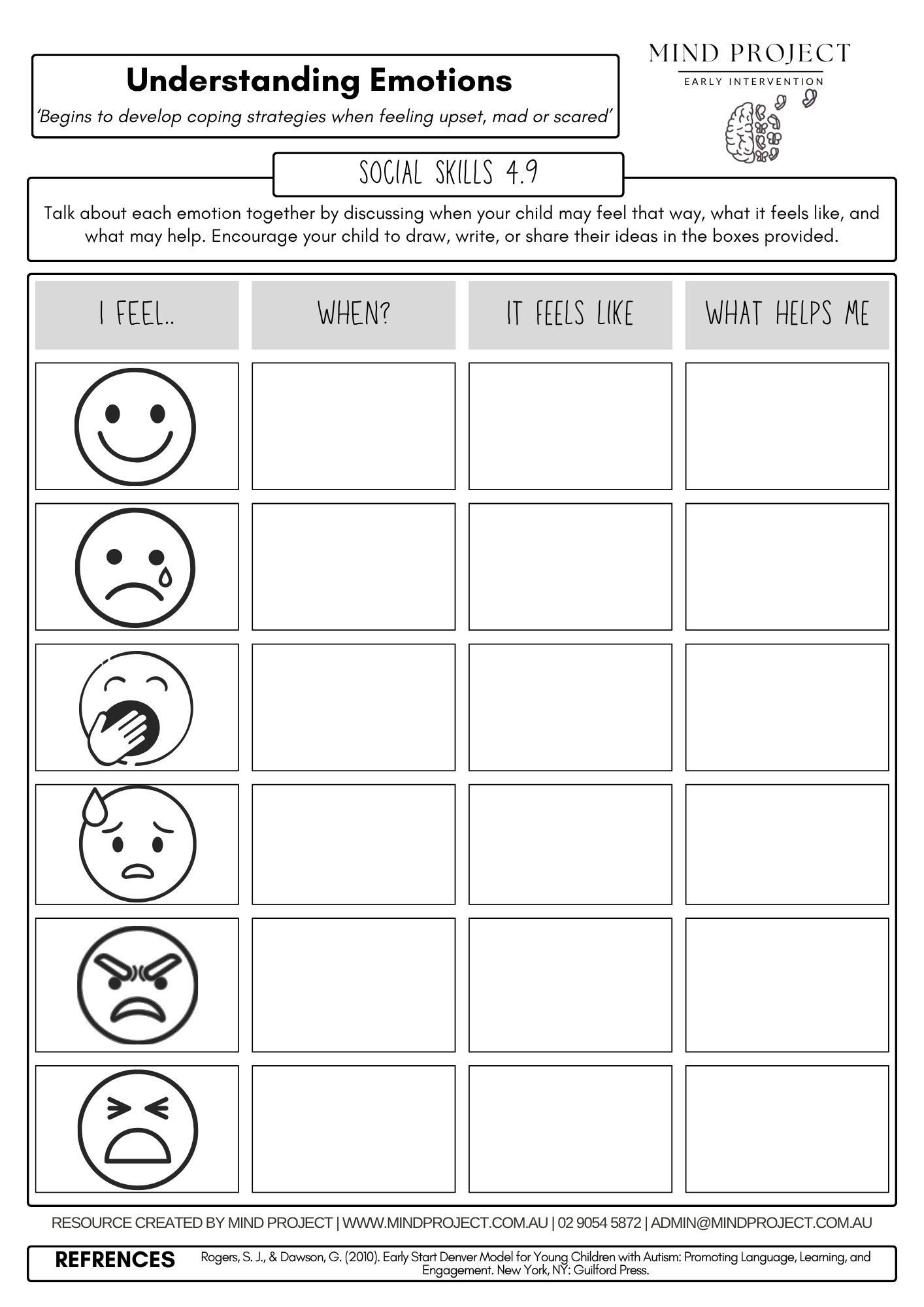
Printable emotions worksheet helping children recognise feelings, understand when emotions happen, describe how emotions feel in their body, and explore coping strategies while supporting emotional awareness, communication, and emotional regulation skills through simple social-emotional learning activities.
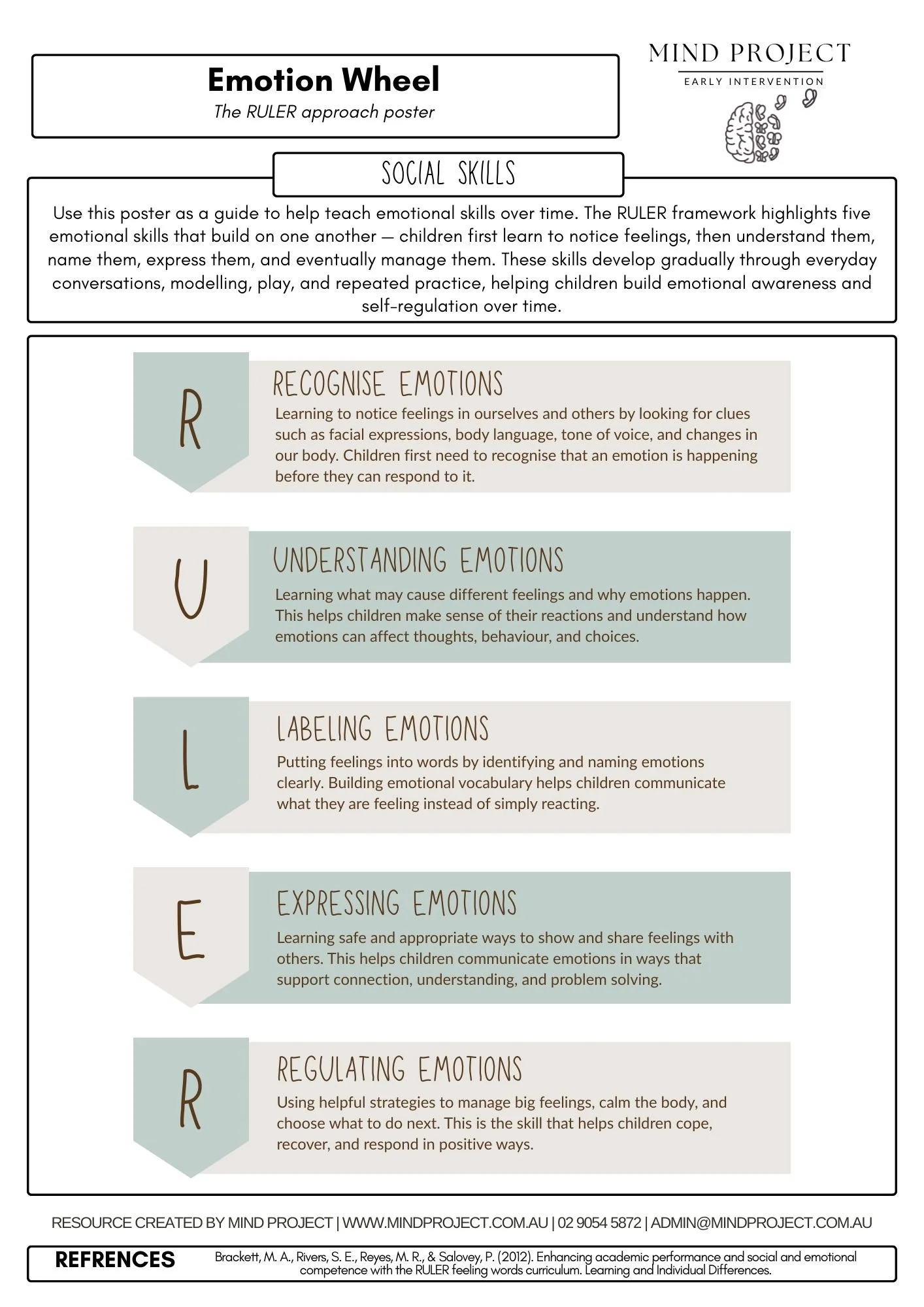
Printable RULER emotional regulation poster designed to help parents teach children the key building blocks of emotional intelligence over time. This parent-friendly resource supports emotional awareness, communication, and self-regulation through recognising, understanding, labelling, expressing, and managing emotions.
Play Skills Activities for Early Intervention and Autism
Early intervention activities that help toddlers and preschool children develop play, imagination, and engagement with others.
What are Play Skills?
Play is one of the main ways young children learn about the world. Through play, children develop communication, imagination, problem-solving, and social skills.
The activities below support toddlers and preschool children in early intervention, including children with autism, to build engagement, creativity, and shared play experiences.
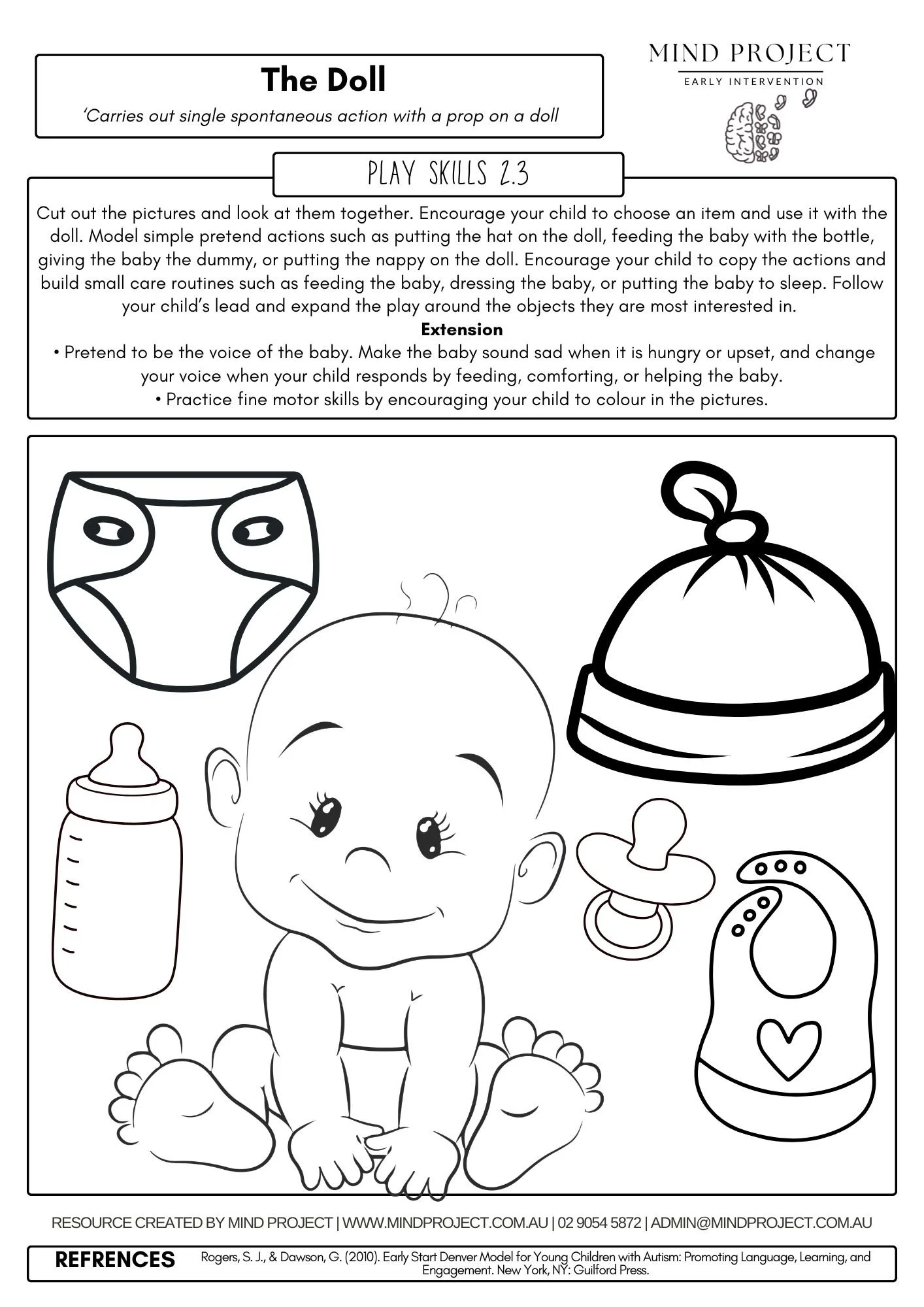
Printable pretend play worksheet supporting imaginative play, social interaction, and early communication skills through doll play activities for toddlers and preschoolers.
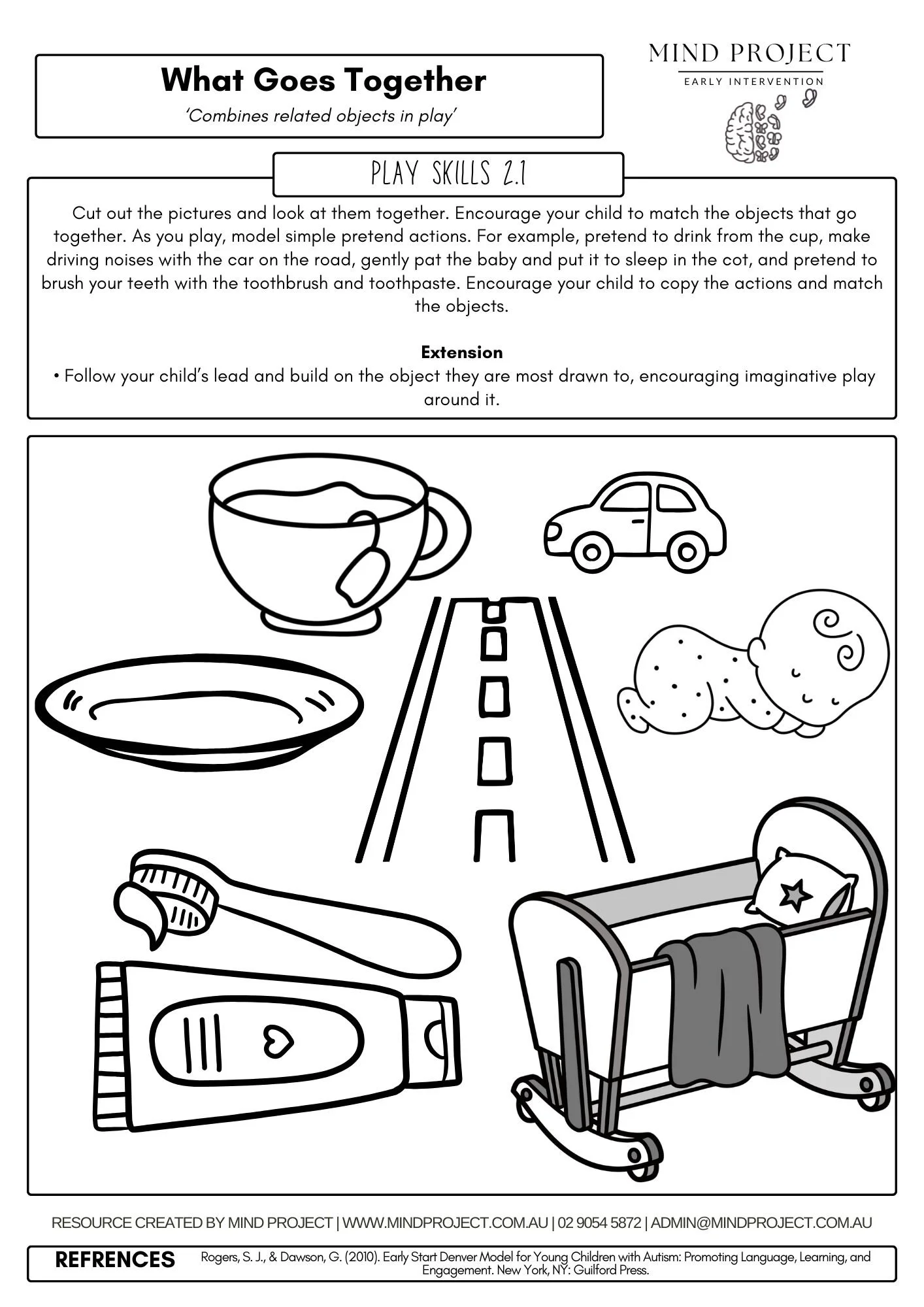
Play-based matching worksheet helping children connect related objects while building cognitive skills, vocabulary, and early language development.
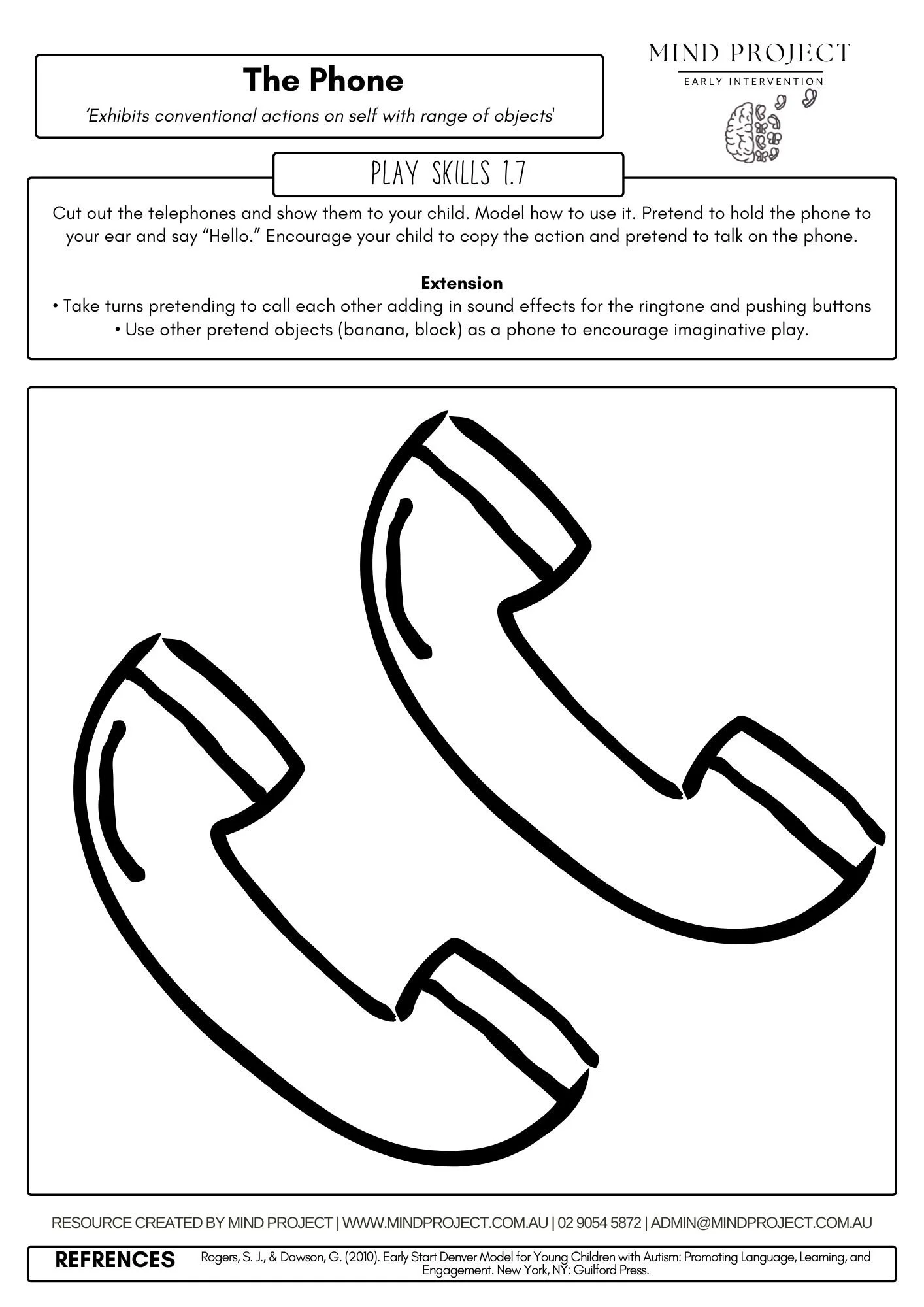
Printable pretend play activity encouraging conversation skills, imitation, and social communication through imaginative telephone play for young children.
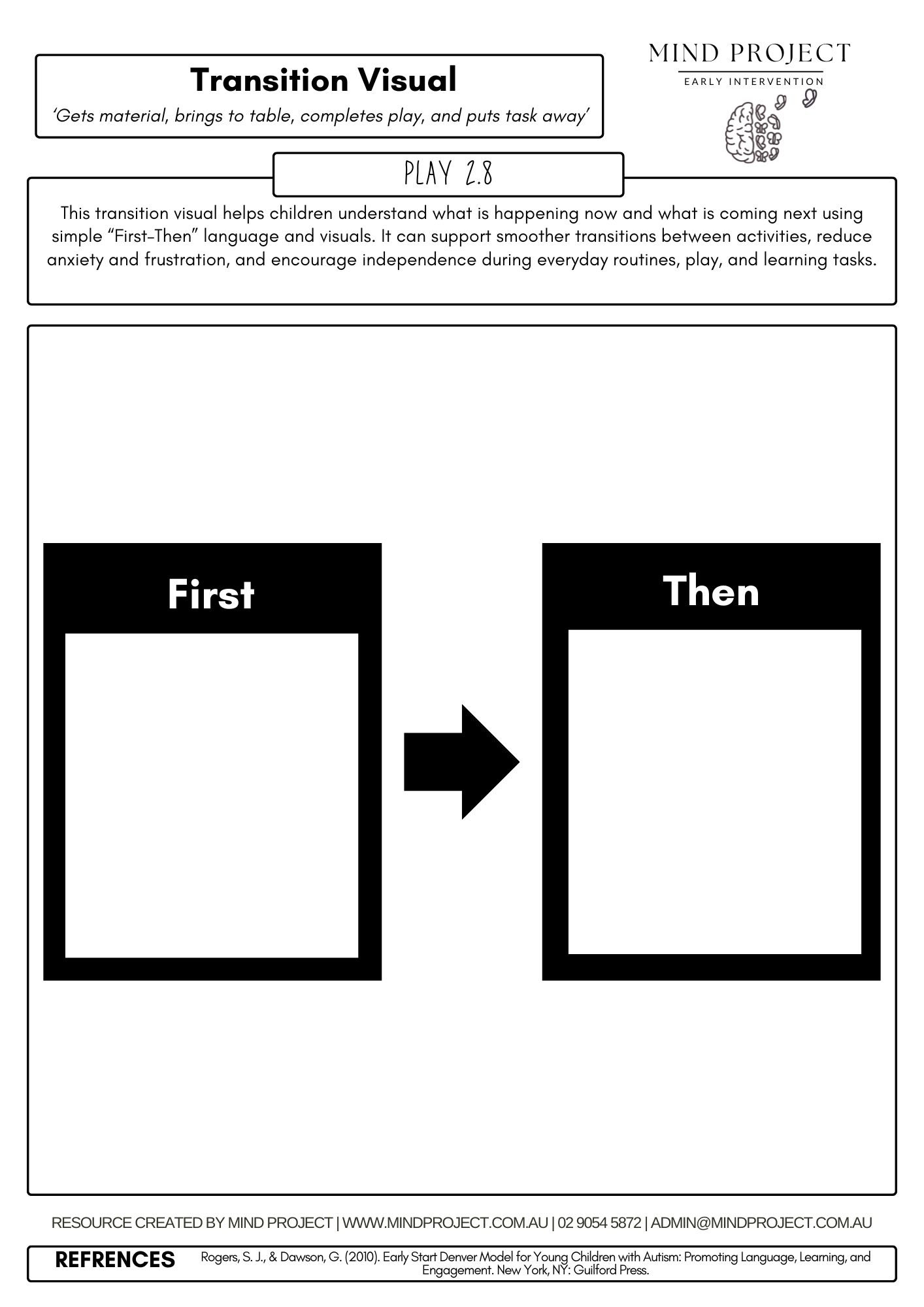
Printable first-then visual support helping children manage transitions, follow routines, and build independence during everyday activities and early intervention sessions.
Fine Motor Activities for Early Intervention and Autism
Early intervention activities that help toddlers and preschool children strengthen hand control for drawing, stacking, and everyday tasks.
What are Fine Motor Skills?
Fine motor skills involve the small muscles of the hands and fingers. These skills help children complete everyday tasks such as drawing, stacking, cutting, and manipulating objects.
The activities below support toddlers and preschool children in early intervention to strengthen hand control and coordination.
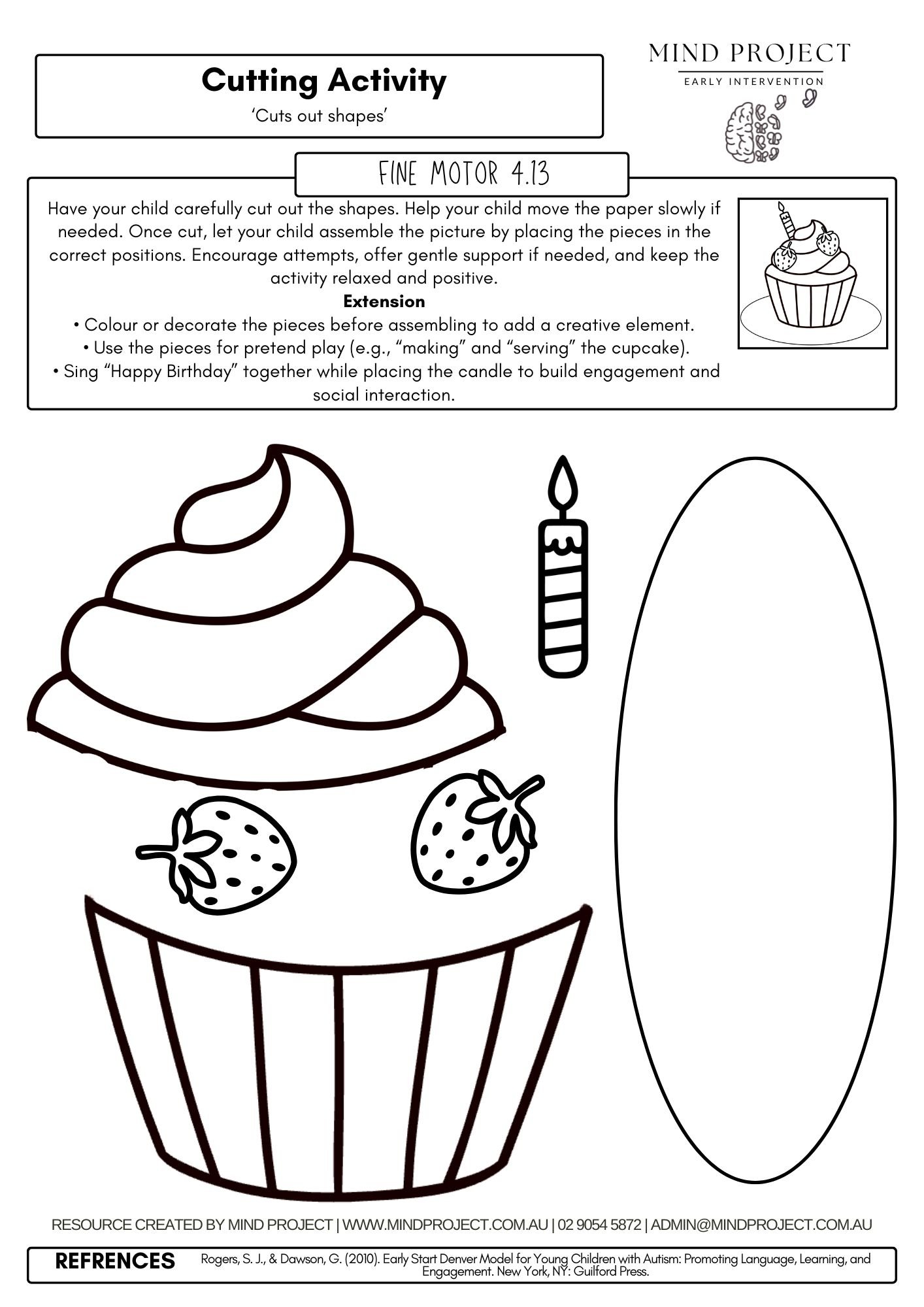
Printable fine motor worksheet helping children practise cutting shapes, hand coordination, and scissor skills through fun cupcake-themed play activities.
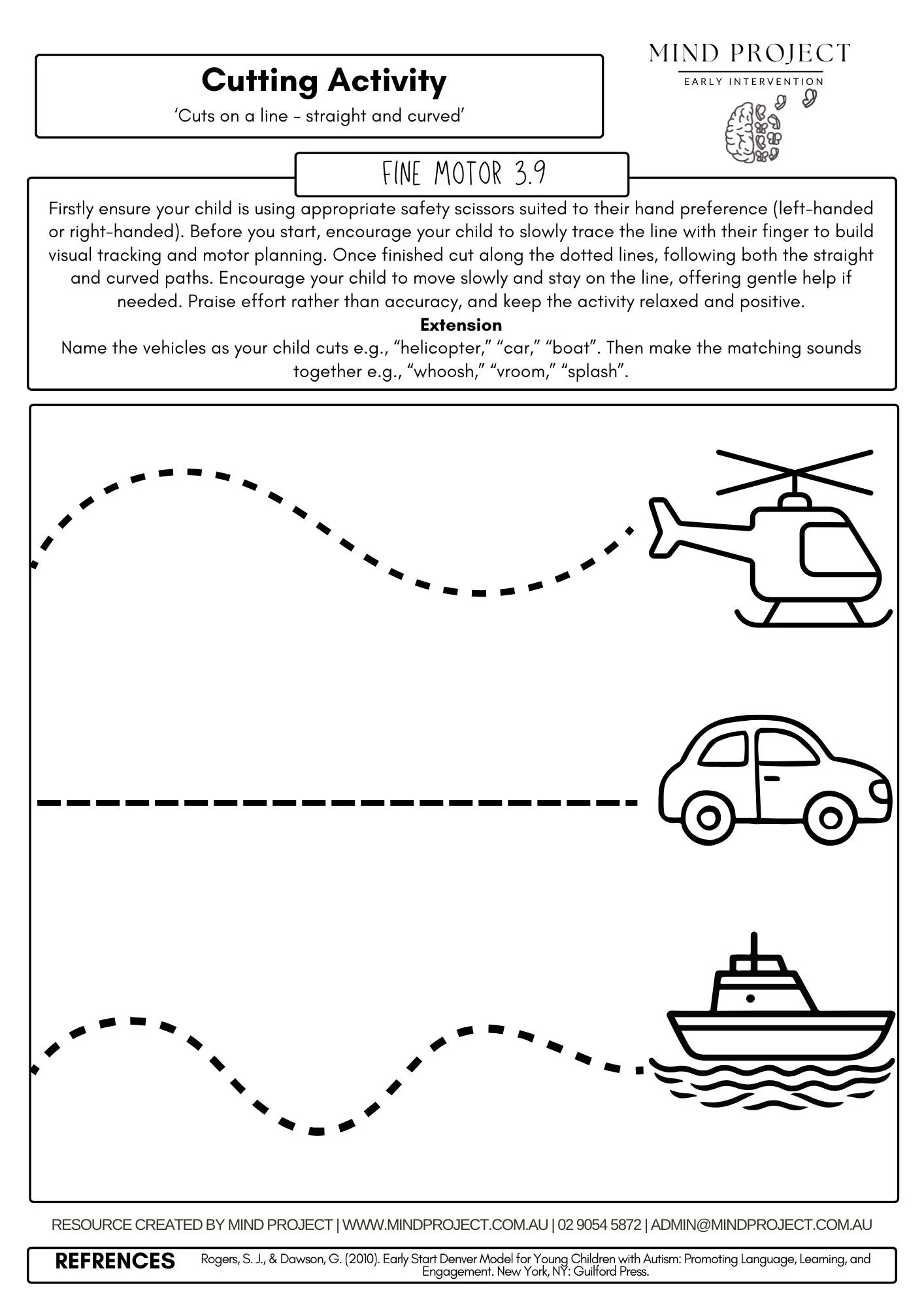
Early childhood scissor skills worksheet supporting fine motor development, hand control, and visual tracking through straight and curved cutting activities.
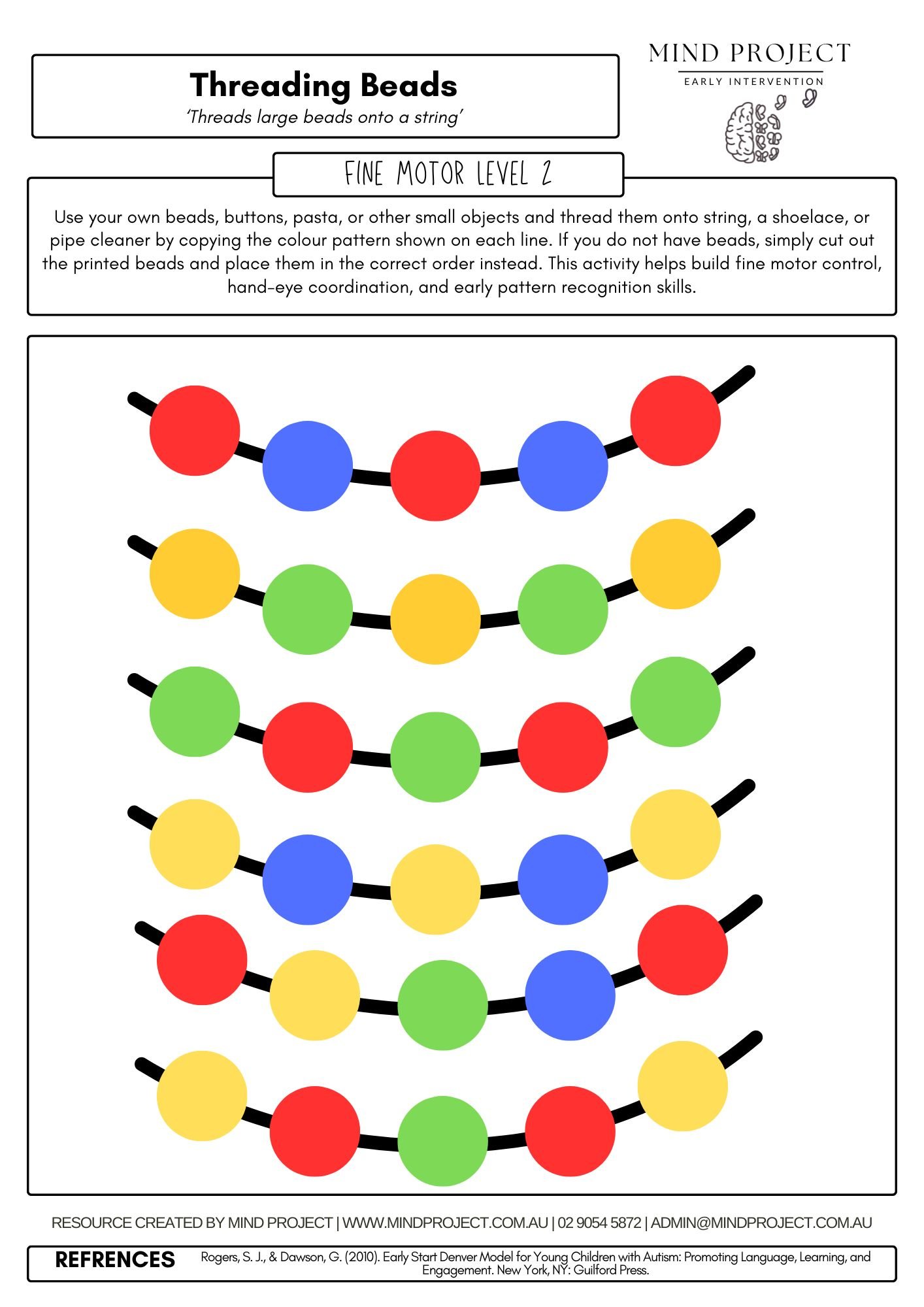
Printable threading beads activity helping children build fine motor skills, hand-eye coordination, visual tracking, and early pattern recognition by copying simple colour sequences through a fun hands-on bead threading activity.
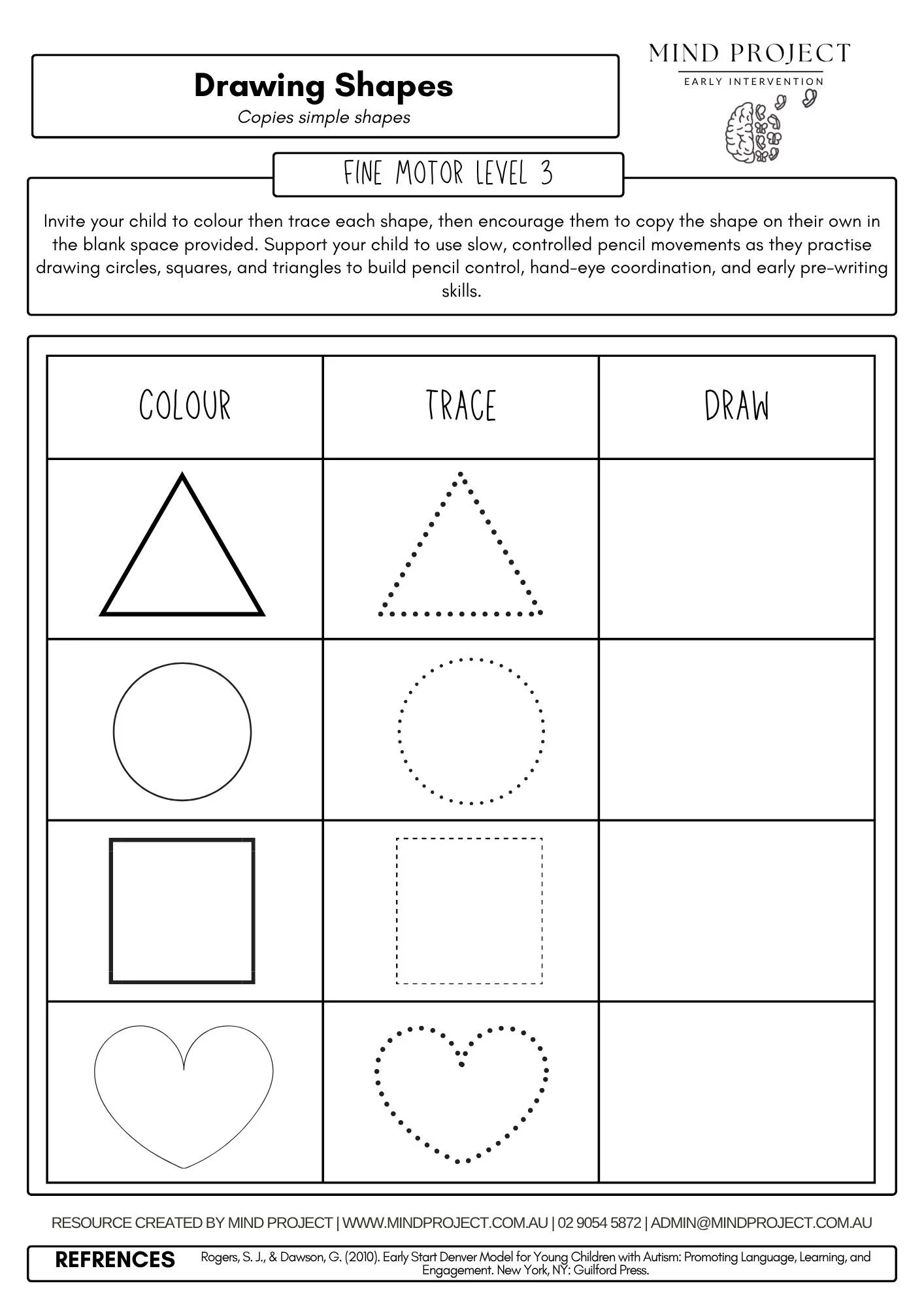
Printable shape tracing and copying worksheet helping children build fine motor skills, pencil control, hand-eye coordination, visual-motor integration, and early pre-writing skills by tracing and copying simple shapes.
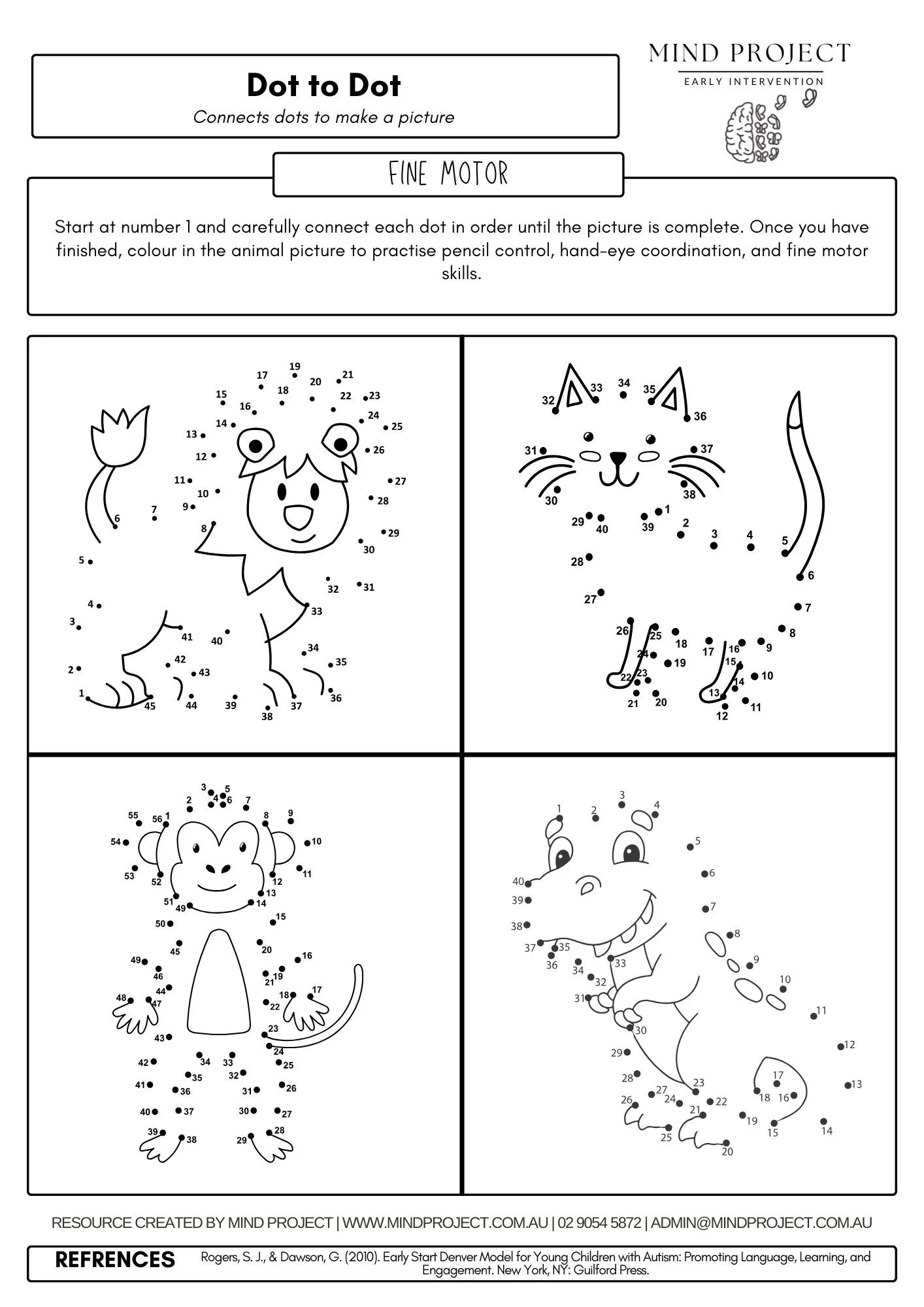
Printable dot-to-dot worksheet helping children build fine motor skills, pencil control, number sequencing, visual tracking, and hand-eye coordination by connecting numbered dots to reveal fun animal pictures.
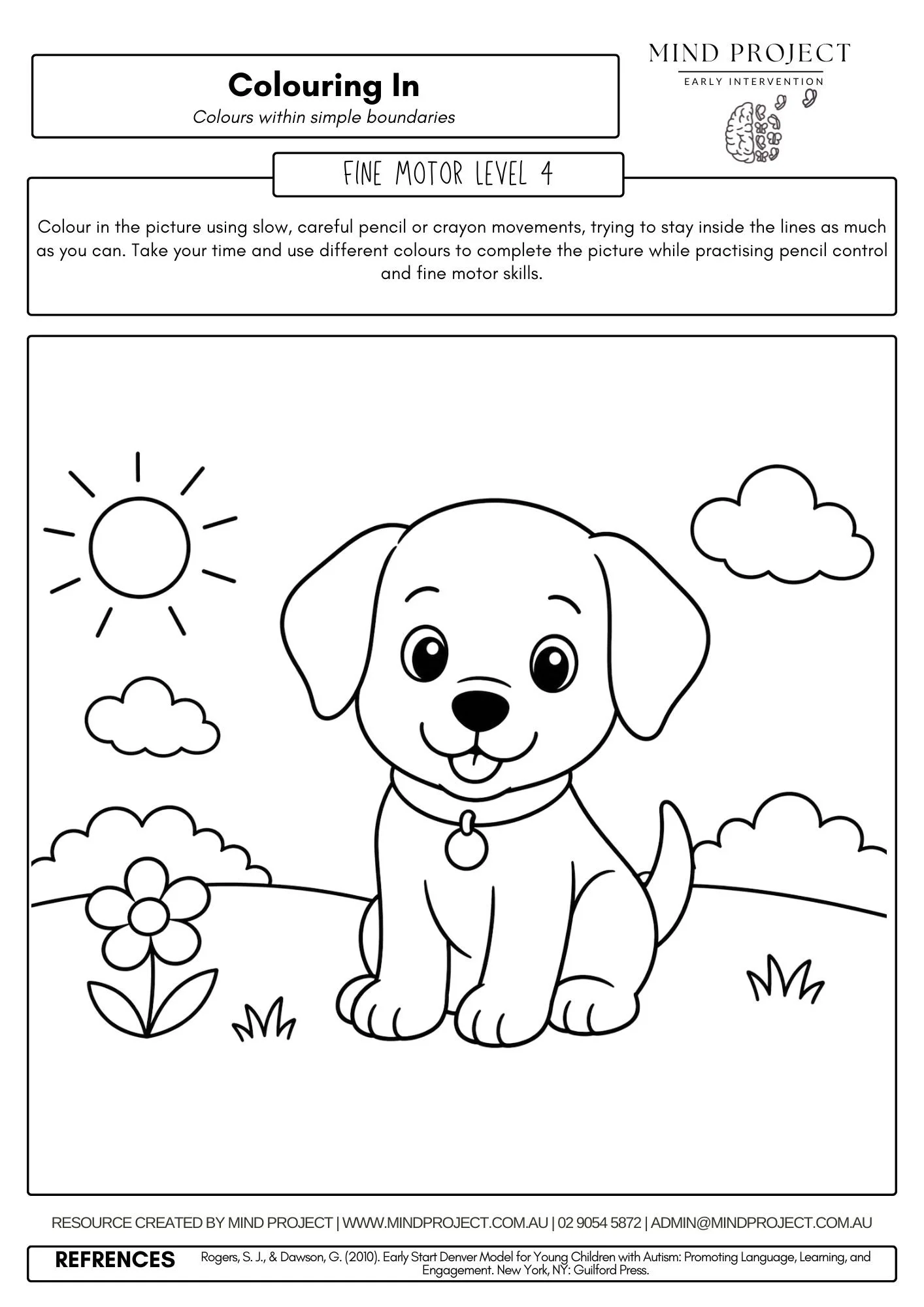
Printable colouring worksheet helping children build fine motor skills, pencil control, hand-eye coordination, and visual-motor skills by practising colouring within simple boundaries through a fun child-friendly colouring activity.
Cognitive Development Activities for Early Intervention
Early intervention activities that help toddlers and preschool children develop thinking, problem-solving, and learning skills.
What is Cognitive Development?
Cognitive development refers to how children think, learn, remember, and solve problems. These skills help children understand their environment and build the foundations for learning.
The activities below support toddlers and preschool children in early intervention to develop thinking, attention, and problem-solving skills.
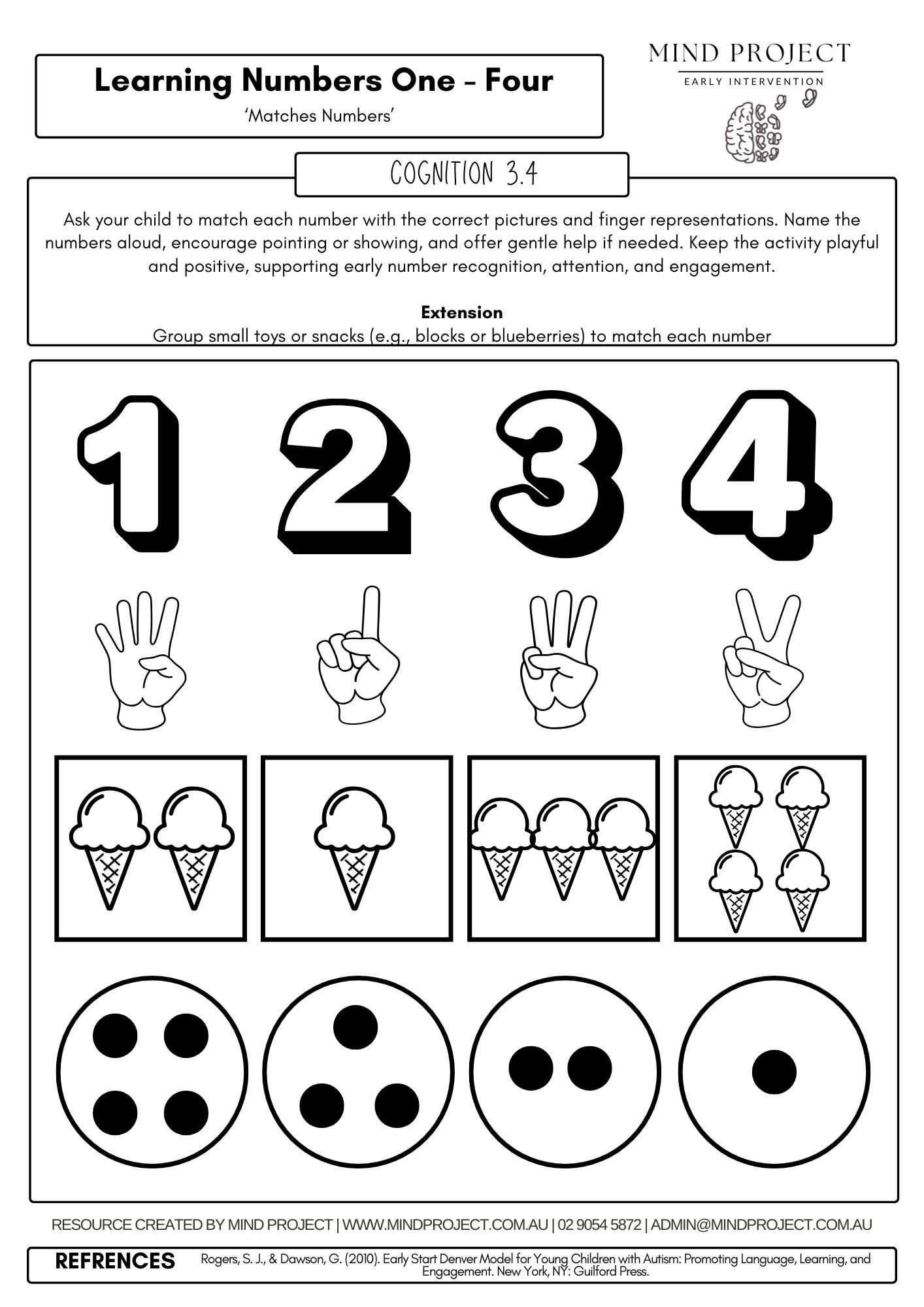
Printable early maths worksheet helping children recognise numbers, match quantities, and build counting skills through hands-on preschool learning activities.

Cognitive development worksheet helping children sort objects into categories while building early reasoning, vocabulary, and problem-solving skills.
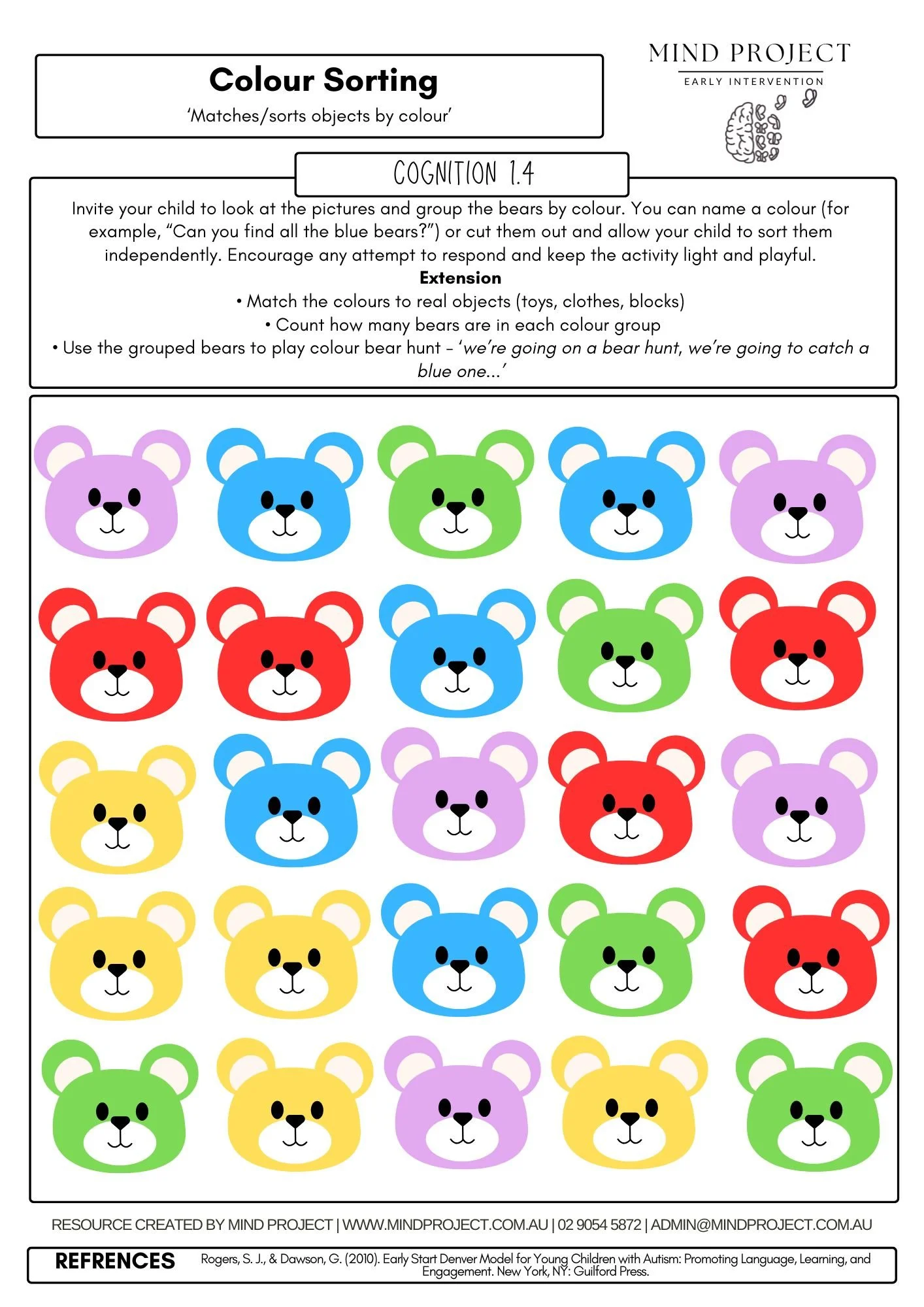
Printable colour matching activity supporting colour recognition, sorting skills, visual discrimination, and early cognitive development in young children.
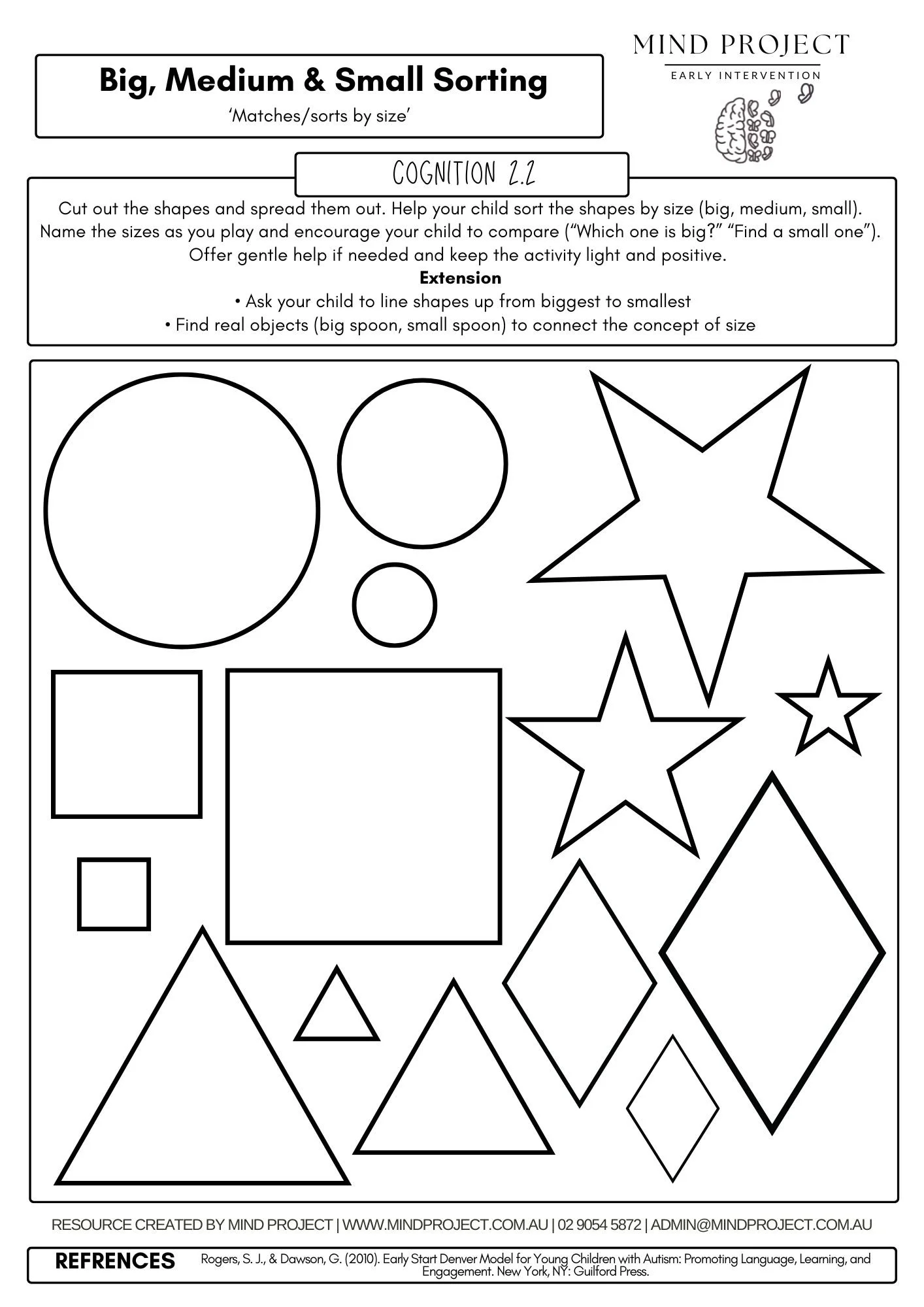
Early learning size sorting worksheet helping children compare big, medium, and small objects while supporting cognitive skills, visual learning, and preschool development.
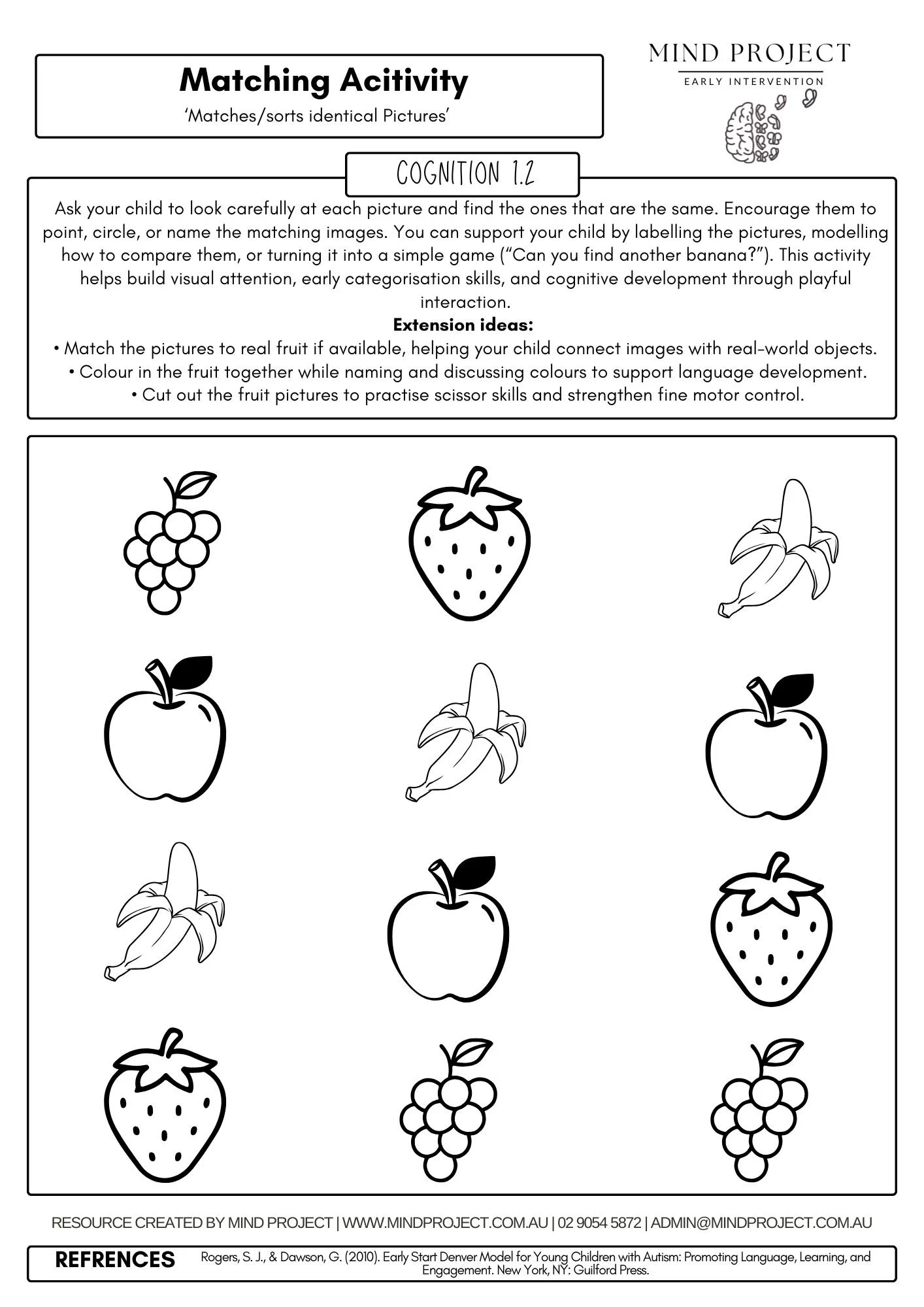
Printable matching worksheet helping children identify matching pictures, strengthen visual attention, and build early cognitive and categorisation skills through play-based learning activities.
Gross Motor Activities for Early Intervention
Early intervention activities that help toddlers and preschool children develop balance, coordination, and whole-body movement.
What are Gross Motor Skills?
Gross motor skills involve large body movements such as walking, climbing, jumping, and balancing. These skills help children explore their environment and participate in active play.
The activities below support toddlers and preschool children in early intervention to develop strength, balance, and coordination.